
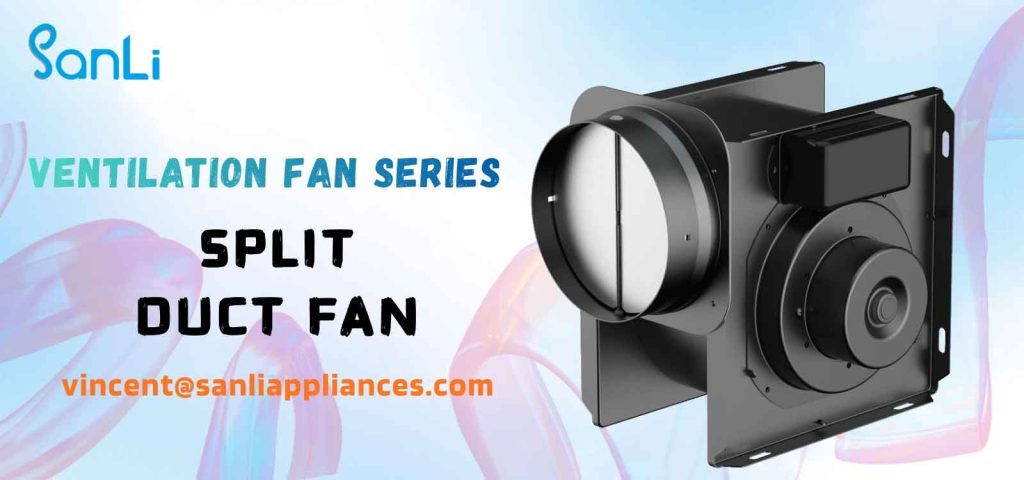
This technical B2B guide explains the practical differences between inline fan extractors and booster fans in real-world HVAC ventilation systems. Written from the perspective of a veteran factory audit director at SanLi Appliances, it delivers clear answers on when each fan type delivers the best performance for commercial buildings, industrial facilities, and ducted exhaust applications. You will find direct selection criteria, a comparison table, insider insights, compliance standards, and proven solutions that help brand owners, engineers, and sourcing managers reduce energy costs while meeting 2026 regulatory demands.
Key Takeaways
Inline fan extractors excel at dedicated high-volume exhaust in long duct runs, bathrooms, kitchens, and industrial processes where removal of stale air, moisture, and odors is the priority.
Booster fans serve as supplemental devices to restore airflow and static pressure in existing HVAC systems, especially in distant zones or buildings with restrictive duct layouts.
Proper selection based on CFM, static pressure (in. wg), noise levels, and application cuts energy use by up to 30 percent and ensures compliance with ASHRAE and IECC codes.
SanLi Appliances offers EC-motor inline duct fans, mixed-flow models, and the BPT Series energy-efficient ceiling-mounted ventilation fan that combine both functions in one reliable platform.
Always evaluate trade-offs in noise, maintenance, and total ownership cost before purchasing from low-cost suppliers.
What Is an Inline Fan Extractor?
An inline fan extractor is a duct-mounted ventilation device designed to pull and expel large volumes of contaminated air directly through the ductwork to the outside. It functions as the primary exhaust component in commercial and industrial ventilation systems.
We at SanLi Appliances build these units with mixed-flow impellers and energy-saving EC motors to handle demanding static pressures while keeping noise low. Typical commercial applications include restaurant kitchens, manufacturing plants, warehouses, and multi-story office buildings where dedicated extraction prevents mold, odors, and poor indoor air quality.
Inline extractors deliver high CFM ratings and maintain consistent performance over long duct runs. Our QA team tests every unit under real operating conditions to confirm they meet or exceed AMCA performance ratings.
What Is a Booster Fan?
A booster fan is an inline-style supplemental fan installed inside existing ductwork to increase airflow velocity and overcome pressure losses caused by long runs, multiple bends, or restrictive filters. It does not serve as the main exhaust device but restores balanced air distribution throughout the HVAC system.
In practice, booster fans solve uneven temperature or stale-air complaints in remote rooms without replacing the entire central system. They are compact, easy to retrofit, and available in both AC and EC motor versions for variable-speed control.
Our factory produces booster-capable models within the D Series mixed-flow inline duct fans that integrate seamlessly into commercial HVAC upgrades.
Key Differences Between Inline Fan Extractors and Booster Fans
Inline fan extractors and booster fans share duct-mounted designs, yet they serve distinct roles in commercial HVAC projects. The choice depends on your primary goal: dedicated high-volume extraction or supplemental pressure restoration.
Here is a direct comparison based on typical SanLi Appliances specifications and industry benchmarks:
| Specification | Inline Fan Extractor | Booster Fan | Commercial Impact |
|---|---|---|---|
| Primary Function | Dedicated exhaust of stale/moist air | Supplemental boost in existing ducts | Extractors handle source removal; boosters balance distribution |
| Typical CFM Range | 200–2,000+ CFM | 100–1,200 CFM | Higher CFM extractors suit kitchens and factories |
| Static Pressure Capability | High (0.5–2.5 in. wg) | Medium (0.2–1.0 in. wg) | Extractors manage long runs and filters |
| Noise Level (Sones) | 1.0–3.5 sones (quiet mixed-flow models) | 0.8–2.5 sones | Both can be quiet with EC motors |
| Motor Technology | EC or AC, variable speed preferred | EC for energy savings | EC motors cut electricity costs by 40–60% |
| Best Applications | Bathrooms, kitchens, industrial exhaust | Distant zones, multi-story balancing | Extractors for IAQ compliance; boosters for comfort |
| Energy Efficiency | High with optimized air flue design | High when used only when needed | Both reduce overall HVAC runtime |
| Installation Complexity | Requires duct access and proper sealing | Easier retrofit in existing ducts | Boosters often lower labor cost |
We select impeller geometry and motor type during factory audits to match these specifications exactly to your project requirements.
When to Choose an Inline Fan Extractor
Choose an inline fan extractor whenever your project demands reliable, high-volume removal of contaminants from a specific source area through extended ductwork.
This is the correct solution for commercial kitchens, bathrooms in hotels or office buildings, laboratories, and manufacturing facilities that generate fumes or high humidity. The extractor sits inline within the duct run and creates negative pressure that pulls air directly from the space to the exterior.
For projects involving bathrooms and building compliance, always reference essential of bathroom ventilation fans in building standard. We recommend pairing extractors with our ceiling exhaust fan buying guide for improved air quality when ceiling-mounted options complement the inline unit.
When to Choose a Booster Fan
Select a booster fan when your existing central HVAC system delivers insufficient airflow to distant rooms or zones due to long duct runs, excessive elbows, or added filters.
Booster fans restore design airflow without a full system replacement. They are ideal for retrofits in older commercial buildings, hotels with added guest-room wings, or warehouses where temperature stratification occurs.
Placement is critical—install the booster upstream of the greatest pressure drop for maximum effect. Our engineering team provides detailed fan-curve matching to ensure the booster does not overload the main blower.
Technical Factors That Influence Your Decision
Static pressure, measured in inches of water gauge (in. wg), determines how well a fan overcomes duct resistance. Inline extractors handle higher values because they must move air against filters, grilles, and long horizontal runs. Booster fans focus on restoring velocity in lower-pressure segments.
CFM requirements follow ASHRAE 62.1 ventilation rates for commercial spaces. Calculate total room volume, occupancy, and contaminant load before selecting either fan type.
EC motors deliver precise speed control and reduce energy consumption dramatically compared with traditional AC motors. In our factory tests, switching to EC technology routinely cuts annual electricity costs by 40 percent or more in continuous-duty applications.
Factory Floor Insight #1: Always request the fan performance curve from the manufacturer. A veteran auditor knows that a seemingly high-CFM fan can fail in real conditions if the impeller design does not maintain efficiency at the operating static pressure point. We reject units that drop more than 10 percent in efficiency under load.
Factory Floor Insight #2: Mixed-flow impeller geometry—combining axial and centrifugal characteristics—gives SanLi inline models the best balance of high pressure and low noise. This hybrid design is one reason our D Series mixed-flow inline duct fans appear in projects worldwide.
Standards, Certifications, and Regulatory Updates in 2026
All SanLi Appliances ventilation fans carry ISO 9001, ISO 14001, CE, RoHS, UL, and ETL certifications. We design products to meet or exceed ASHRAE Standard 62.1 for ventilation rates and IECC fan efficacy requirements that took effect in 2026.
Governments worldwide continue to tighten energy-efficiency mandates. The commercial HVAC market is projected to reach significant growth by 2033, driven by these regulations (Astute Analytica, 2026). Fans now account for 30–50 percent of total HVAC energy use in commercial buildings, according to U.S. Department of Energy data. Selecting the right inline or booster model directly affects compliance and operating budgets.
For detailed compliance guidance, review our article on essential of bathroom ventilation fans in building standard and our ceiling exhaust fan buying guide for improved air quality.
Real-World Case Study: Hospital Retrofit Delivers Measurable Savings
In a 2025 retrofit of a mid-size hospital in the southeastern United States, facility managers replaced aging centrifugal exhaust units with SanLi-style EC-motor inline duct extractors in critical care wings. The project also added targeted booster fans in long supply ducts serving patient rooms.
Results, verified by third-party energy modeling, showed a 28 percent reduction in ventilation-related electricity costs while increasing fresh-air delivery by 35 percent. Indoor air quality testing confirmed compliance with ASHRAE 62.1, and maintenance calls dropped because the new fans required no belt adjustments. The hospital procurement team later standardized on SanLi models for future expansions.
This case mirrors industry-wide shifts toward high-efficiency inline solutions in healthcare and commercial facilities.
Trade-Offs, Limitations, and Risks of Low-Cost Suppliers
Every technology carries trade-offs. Inline fan extractors provide excellent extraction but can generate more noise if not properly isolated. Booster fans improve comfort yet add to total system power draw if oversized or left running continuously.
Low-cost suppliers often cut corners on bearing quality, motor insulation, and sheet-metal gauge. The result is premature failure, higher noise, and increased downtime—exactly the opposite of what B2B buyers need.
We maintain strict supplier audits and perform 100 percent final testing to eliminate these risks. Our customers report mean time between failures exceeding 80,000 hours when fans are installed per our guidelines.
How SanLi Appliances Delivers the Right Solution for Your Project
At SanLi Appliances, we manufacture a complete range of ventilation fans, axial fans, and centrifugal fans engineered for international B2B wholesale. Our inline duct fans and booster-capable models feature the same energy-saving motors and optimized air-flue designs trusted by major brands.
For new high-efficiency installations, explore our high-efficiency ventilation system solution for applications that integrates inline extractors, boosters, and recovery ventilators.
If you need quiet ceiling-mounted performance alongside ducted units, consider the BPT Series energy-efficient ceiling-mounted ventilation fan. Distributors and wholesalers who want to start or expand their HVAC product line in the fastest way can review our ventilation products, ventilation fan manufacturer, axial fan manufacturer, and centrifugal fan manufacturer offerings.
We also encourage you to visit our ventilation blog and resources library to find more helpful information for them.
For more on long-term partnership advantages, read our post explaining why need to cooperative with ventilation fan manufacturer and our choosing the right advices for ventilation fan solutions.
Step-by-Step Guide to Selecting the Correct Fan
Measure required CFM using room volume and ASHRAE 62.1 rates.
Calculate total static pressure loss through the entire duct path.
Determine noise tolerance for the occupied space.
Choose motor type (EC preferred for variable speed and efficiency).
Verify certifications and request performance curves.
Contact our team for custom matching if standard models need adjustment.
This structured approach prevents costly mistakes and ensures the selected fan—whether inline extractor or booster—delivers years of reliable service.
Frequently Asked Questions
Q: Can one fan type replace the other in every situation? No. Inline fan extractors are built for primary exhaust duties, while booster fans restore pressure in existing systems. Using the wrong type leads to poor performance or excessive energy use.
Q: How do I calculate the right size for a commercial bathroom installation? Follow building code requirements for air changes per hour, then add duct losses. Our bathroom exhaust fan innovations that make your life easier article provides detailed examples and sizing charts.
Q: Are EC motors worth the extra upfront cost? Yes. They pay for themselves within 12–24 months through energy savings and precise control. All SanLi EC models carry full UL and CE certification.
Q: What maintenance do inline extractors and boosters require? Clean impellers and check motor bearings annually. Our sealed-bearing designs minimize this work compared with lower-cost alternatives.
Q: How do current 2026 energy regulations affect fan selection? New IECC and ASHRAE updates emphasize fan efficacy and low-GWP system compatibility. Choose certified high-efficiency models now to future-proof your projects.
Q: Where can sourcing managers find reliable wholesale pricing? Contact our international B2B team. We support distributors, brand owners, and R&D departments with competitive quotations, samples, and private-label options.
Final Thoughts and Next Steps
Selecting between an inline fan extractor and a booster fan is a strategic decision that affects energy costs, indoor air quality, and long-term system reliability. At SanLi Appliances we combine 20-plus years of manufacturing experience with rigorous testing to give you fans that perform exactly as specified.
Whether you need dedicated extraction for a new commercial kitchen or supplemental boosting for an existing office HVAC upgrade, our inline duct fans, centrifugal models, and BPT Series deliver the performance your customers demand.
For a quick quote or technical questions, send an email to inquiry@sanliappliances.com.
To expand your knowledge, check these related resources:
We look forward to supporting your next ventilation project with proven, certified solutions built for the demands of today’s commercial and industrial markets.
