

when it comes to ventilation fan solutions. My experience with has shown me that proper fan selection and installation can directly impact energy efficiency and occupant safety. For example, commercial spaces with balanced systems waste up to , while schools see energy use drop by 10% through correct air balancing.
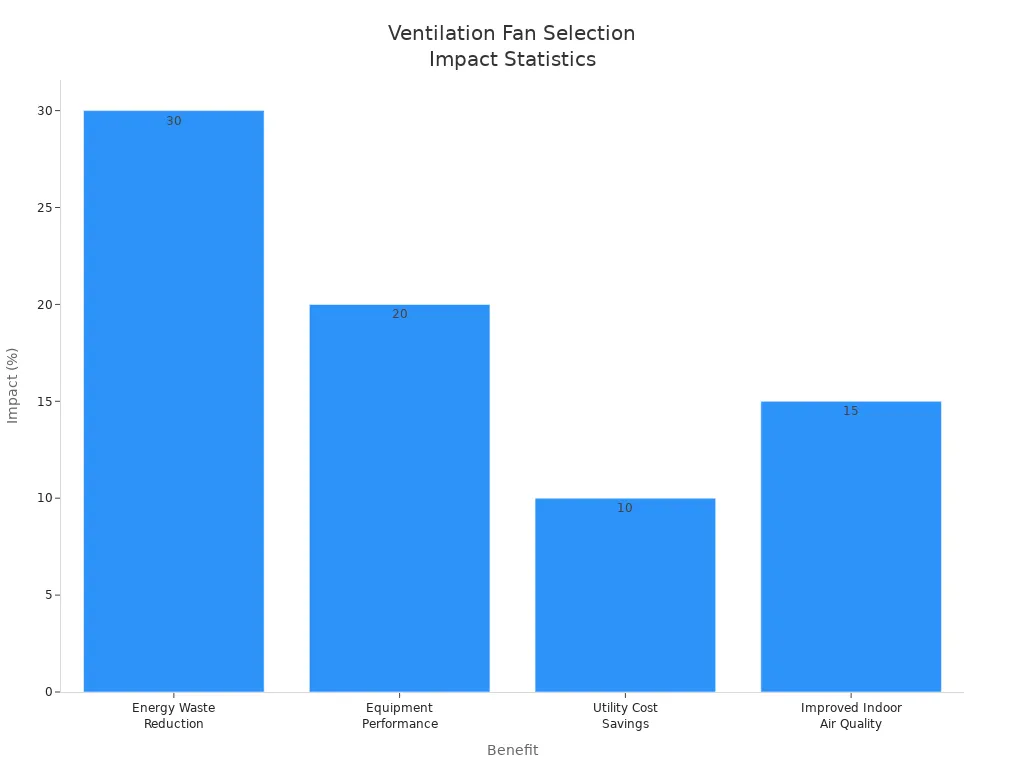
I encourage you to consider your unique space and compliance needs. and by exploring trusted sources. This aims to help you make decisions that protect both your health and your investment.
Key Takeaways
to improve energy efficiency and occupant safety.
Assess your space type—residential or commercial—to determine specific ventilation needs.
Calculate airflow requirements based on room size and occupancy to ensure proper ventilation.
Choose exhaust fans that match the unique needs of kitchens, bathrooms, and workshops for optimal air quality.
Stay updated on local building codes and regulations to ensure compliance and safety.
Hire qualified professionals for installation to avoid costly mistakes and ensure proper operation.
Implement a regular maintenance schedule to keep exhaust fans running efficiently and safely.
Consider smart ventilation solutions that offer energy savings and improved air quality through automation.
Identifying Ventilation Needs
Space Assessment
Residential vs. Commercial
When I assess ventilation needs, I always start by identifying the type of space. Residential buildings have different requirements than commercial spaces. In homes, I focus on comfort and health. I follow ASHRAE’s recommendation of at least of air per minute per person. This helps maintain good indoor air quality for families. In commercial settings, I consider occupancy rates and the activities that take place. Offices, retail stores, and schools often need higher ventilation rates to handle more people and equipment. I use these guidelines to ensure each space gets the right amount of fresh air.
Kitchens, Bathrooms, Workshops
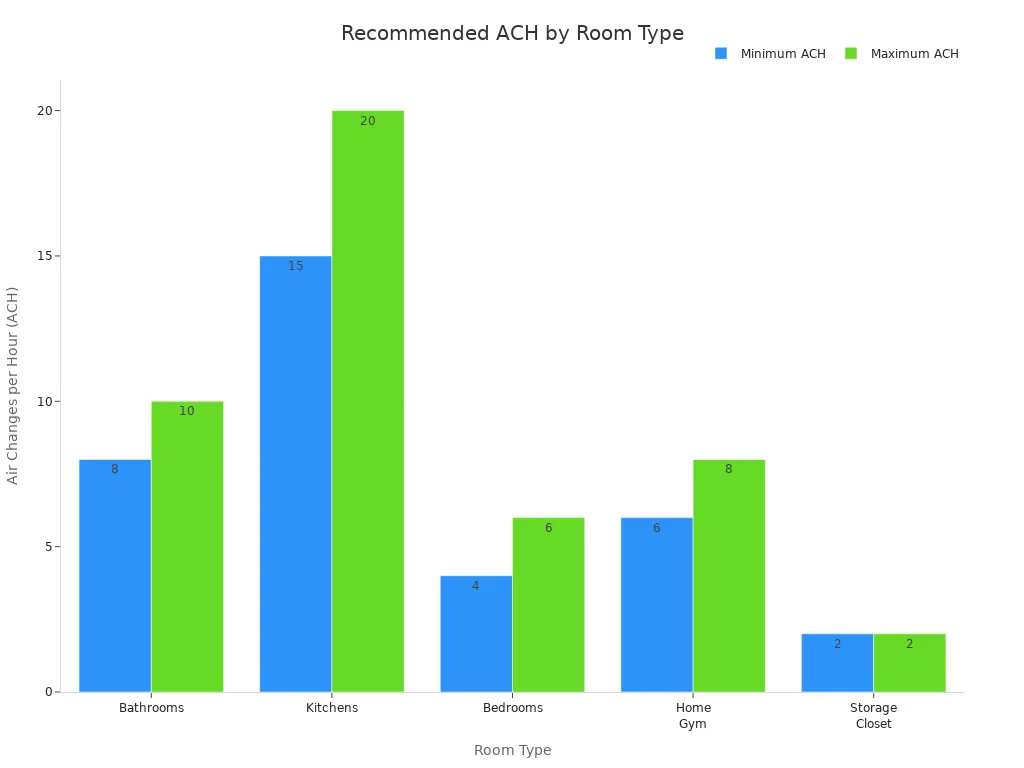
Specific rooms need special attention. Kitchens and bathrooms generate moisture and odors. Workshops may produce dust or fumes. I calculate airflow based on room size and use. For example, a standard bathroom should have at least 50-60 CFM, while larger bathrooms need 100-150 CFM. Kitchens require even more, often 15-20 air changes per hour. I always check local codes to confirm these numbers. This approach keeps indoor air quality high and prevents problems like mold or lingering smells.
Airflow Requirements
Room Size and Air Changes
Room size and the number of people inside affect how much ventilation is needed. I use a simple formula: CFM = (Room Volume × ACH) / 60. This helps me match the fan size to the space. Bedrooms need 4-6 air changes per hour, while home gyms need 6-8. I always check that the system can handle peak occupancy. This ensures airflow efficiency and keeps everyone comfortable.
| Room Type | Recommended ACH | CFM Calculation Formula |
|---|---|---|
| Bathrooms | 8-10 | CFM = (Room Volume × ACH) / 60 |
| Kitchens | 15-20 | CFM = (Room Volume × ACH) / 60 |
| Bedrooms | 4-6 | CFM = (Room Volume × ACH) / 60 |
| Home Gym | 6-8 | CFM = (Room Volume × ACH) / 60 |
| Storage Closet | 2 | CFM = (Room Volume × ACH) / 60 |
Contaminant Sources
I always look for sources of contaminants. Cooking, cleaning, and hobbies can release particles and gases. I recommend using higher ventilation rates in these areas. This keeps indoor air quality at a safe level. I also consider , as these factors influence comfort and air quality.
Climate and Codes
Local climate and building codes play a big role in my recommendations. In humid or cold regions, I may suggest energy recovery ventilators or heat recovery ventilators. These systems help maintain indoor air quality while saving energy. I always check and local mechanical codes. These rules set the minimum ventilation rates and guide my fan selection. Building codes often require engineered systems, especially in new, tightly built homes. I stay updated on code changes to ensure compliance and protect your investment.
Tip: Always document your and keep records of code compliance. This helps with future upgrades and inspections.
Choosing Ventilation Fan Solutions
When I help clients select , I always start by matching the right fan type to the specific needs of the space. The right choice improves air quality, saves energy, and protects your investment. I consider the type of exhaust fans, selection criteria, and advanced features to ensure the best outcome.
Types of Exhaust Fans
Exhaust, Supply, Balanced
I often explain the main types of exhaust fans to my clients. Each type serves a unique purpose in ventilation fan solutions. Exhaust fans remove stale air, supply fans bring in fresh air, and balanced systems do both for optimal air exchange. I use a table to compare the most common exhaust fans for residential and commercial applications:
| Type of Exhaust Fan | Where They’re Used | Pros | Cons |
|---|---|---|---|
| Inline Duct Fans | Bathrooms, kitchens | Lower noise, multiple ventilation needs, hidden installation | Requires skilled installation, higher initial cost |
| Window Exhaust Fans | Kitchens, living rooms, bedrooms | Easy to install, flexible, economical | Less secure, lower ventilation power |
| Kitchen Range Hoods | Over stovetops in kitchens | Filters grease, stylish, includes lighting | Higher cost, requires maintenance |
| Industrial Exhaust Fans | Factories, warehouses, commercial kitchens | High airflow, durable, explosion-proof | Higher prices, noisier operation |
I recommend wall-mounted exhaust fans for kitchens and bathrooms. Ceiling-mounted exhaust fans work well in spaces without exterior walls. Inline exhaust fans operate quietly and suit offices or commercial buildings. Window exhaust fans offer a cost-effective solution for temporary needs. Axial exhaust fans move large volumes of air in both homes and industrial settings. For high-demand areas, I always choose industrial exhaust fans, especially in commercial kitchen exhaust fan installations.
Selection Criteria
Size and Capacity
I always measure the room size before recommending a fan. I using the rule of 1 CFM per square foot. For small rooms like bathrooms, I suggest a bathroom exhaust fan with 50-100 CFM. For kitchens, I recommend kitchen exhaust fans with 100-200 CFM. Large rooms or commercial kitchen exhaust fan systems need 200 CFM or more. I also check duct sizing and pressure loss to ensure the system runs efficiently. I match the fan’s capacity to the air quantity and temperature needs of the space.
Noise and Efficiency
Noise level matters to my clients. I compare leading exhaust fans by their decibel ratings and energy efficiency. Here is a quick reference:
| Brand | Noise Level (dB) | Energy Efficiency Rating | Cooling Cost Reduction |
|---|---|---|---|
| Wholehousefan.com | 40 to 52 | High | 50% to 90% |
| QuietCool | Low | Moderate | Not specified |
| AirScape | 49 to 55 | High | Not specified |
| Tamarack | 48 to 56 | Moderate | Not specified |
| CentricAir | N/A | High | Not specified |
I always recommend energy-efficient fans for long-term savings. I select quiet models for bedrooms and offices. For commercial kitchen exhaust fan systems, I balance noise with airflow power.
Durability
Durability is critical in high-use areas. I choose exhaust fans with stainless steel construction for kitchens and workshops. I look for sealed motors and coated blades to prevent grease buildup. In commercial kitchen exhaust fan installations, I always check for and fire dampers in the ductwork. I make sure grease filters and traps are easy to access for cleaning. These steps extend the life of the system and reduce maintenance costs.
Features and Controls
Smart Controls
Modern ventilation fan solutions now include smart controls. I often recommend fans with IoT connectivity and mobile app integration. These features let users adjust settings remotely and monitor performance in real time. Variable speed settings allow for precise airflow control, which saves energy and reduces noise.
Sensors
I look for exhaust fans with built-in sensors. Temperature and humidity sensors help the system adjust automatically to changing conditions. This is especially useful in commercial kitchen exhaust fan systems, where heat and moisture levels can change quickly. Sensors improve comfort and efficiency without manual adjustments.
Safety Features
Safety always comes first in my recommendations. I select exhaust fans with fire-resistant materials for kitchens and workshops. I make sure the commercial kitchen exhaust fan includes sealed motors and coated blades to handle grease and moisture. I check that fire dampers are installed in the ductwork to prevent flame spread. I also ensure grease filters and traps are easy to clean. These features protect both people and property.
Tip: Always choose ventilation fan solutions with advanced controls and safety features for high-risk areas like kitchens and workshops. This reduces fire risk and ensures reliable operation.
I believe that careful selection of exhaust fans, based on type, capacity, efficiency, and safety, leads to the best ventilation fan solutions. I always tailor my recommendations to the unique needs of each space, whether it is a home bathroom exhaust fan or a large commercial kitchen exhaust fan system.
Installation Best Practices
Qualified Professionals
Licensing and Certification
When I guide clients through exhaust fan installation, I always stress the importance of hiring qualified professionals. Proper licensing and certification ensure that the work meets safety and code requirements. to explain the different qualifications you should look for:
| Professional Type | Qualifications Required |
|---|---|
| Licensed Electricians | Must have a valid electrical license, experience with electrical installations, and knowledge of safety compliance with Australian standards. |
| HVAC or Ventilation Specialists | Should have expertise in complex ducted installations and an understanding of integrated heating and cooling systems. |
| General Handypersons or Builders | Can perform basic tasks but cannot handle electrical work unless licensed. Must ensure safety and compliance with regulations. |
I always recommend checking credentials before starting any exhaust fan installation. This step protects your investment and ensures the system operates safely.
Experience Verification
I never overlook experience when selecting a contractor for professional installation. I ask for references and review past projects. I look for professionals who have handled similar kitchen ventilation or commercial jobs. This approach helps avoid costly mistakes and ensures the job gets done right the first time.
Pre-Installation Planning
Site Evaluation
Before any installation, I follow a clear set of steps to plan the project. Careful planning forms the foundation of installation best practices. :
Evaluate the space and its ventilation needs.
Choose the right type of fan.
Plan the installation layout carefully.
Prepare the site for installation.
Follow best practices during installation.
Test and balance the system.
Commit to regular maintenance.
Prioritize safety throughout the process.
Focus on long-term efficiency.
I always tailor these steps to the unique requirements of each space.
Structural Assessment
I inspect the building structure before starting exhaust fan installation. I check for obstacles in walls or ceilings. I verify that the structure can support the fan and any ductwork. This step prevents future problems and ensures the fan works as intended.
Optimal Placement
Kitchen and Cooking Areas
I pay special attention to kitchen ventilation. I position exhaust fans close to cooking surfaces to capture smoke, grease, and odors at the source. This placement improves air quality and reduces cleaning needs. I also make sure the fan size matches the kitchen’s demands.
Ductwork Considerations
I always plan ductwork routes to minimize bends and length. Short, straight ducts help exhaust fans move air efficiently. Proper placement and improves airflow dynamics. This synergy reduces energy consumption and boosts system performance. I coordinate with other ventilation systems to ensure everything works together smoothly.
Tip: Professional servicing and regular inspections keep your system running efficiently and safely.
Compliance
Permits and Standards
I always remind my clients that compliance is not optional. It protects your investment and ensures the safety of everyone in the building. Before I start any installation, I identify the authority having jurisdiction (AHJ) and confirm which code edition applies. I check the occupancy classification and climate zone. These steps help me select the right equipment and design the system to meet all requirements.
I follow a clear process for compliance at every phase. Here is a table that outlines the main in both residential and commercial buildings:
| Phase | Requirements |
|---|---|
| Pre-Design | Identify the AHJ, confirm code edition, determine occupancy classification, confirm climate zone, identify refrigerant type |
| Design Documentation | Complete load calculations, specify equipment efficiency, prepare ventilation rate calculations, design duct system, document fire damper locations, identify commissioning requirements |
| Permitting | Submit mechanical permit application, respond to plan review comments, obtain permit |
| Installation and Inspection | Schedule rough-in inspection, complete refrigerant system pressure testing, schedule final mechanical inspection, submit commissioning documentation |
| Post-Occupancy Documentation | Retain permit records, establish refrigerant tracking log |
I always complete load calculations and document fire damper locations. I submit all required paperwork for mechanical permits and respond quickly to plan review comments. During installation, I schedule inspections and keep detailed records. After the project, I retain all permit documents and track refrigerant use if needed.
Tip: Always keep copies of your permits and inspection reports. These documents make future upgrades and inspections much easier.
Common Mistakes
I have seen many projects run into trouble because of simple compliance errors. One common mistake is skipping the permit process. Some people think they can save time or money, but this often leads to costly corrections later. Another mistake is failing to follow the latest code edition. Codes change often, and using outdated standards can result in failed inspections.
I also see problems when installers do not document fire damper locations or forget to schedule required inspections. Missing these steps can put the building at risk and delay occupancy. Sometimes, people ignore the need for commissioning documentation. This paperwork proves the system works as designed and is often required for final approval.
To avoid these mistakes, I always follow installation best practices and double-check every compliance step. I keep a checklist for each project and review it before moving forward. This approach helps me deliver safe, efficient, and code-compliant exhaust fans every time.
Exhaust Fan Maintenance
Routine Checklist
I always follow a strict maintenance checklist to keep running efficiently. I recommend before starting any work. My maintenance checklist includes these essential steps:
Clean fan blades and housing thoroughly.
Inspect and replace filters as needed.
Check the motor and moving parts for wear.
Inspect all electrical connections for safety.
Test airflow efficiency at each vent.
Clean and maintain ducts to prevent buildup.
Lubricate bearings if required.
Check for damage or corrosion on exterior components.
I use this checklist for every exhaust fan maintenance session. I also keep a written maintenance checklist for each fan, which helps me track service history and spot recurring issues. For kitchen exhaust cleaning, I pay extra attention to grease buildup on blades and inside the housing. I always check filters and replace them if they show signs of clogging or wear. This preventive maintenance approach reduces the risk of breakdowns and keeps air quality high.
Cleaning Blades and Housing
I remove dust, grease, and debris from blades and housing during every maintenance checklist review. For kitchen exhaust cleaning, I use degreasers and soft brushes to avoid damaging the fan. I always wear gloves and safety glasses for protection. Clean blades improve airflow and reduce noise.
Filter Inspection and Replacement
I check filters during every maintenance checklist. I replace them if they look dirty or damaged. For kitchen exhaust cleaning, I inspect filters monthly or as required by NFPA 96 standards. Clean filters keep the system efficient and prevent fire hazards.
Motor and Moving Parts
I inspect the motor and moving parts for signs of wear or overheating. I lubricate bearings if the manufacturer recommends it. I check for unusual noises or vibrations, which can signal problems. For kitchen exhaust cleaning, I pay close attention to motor function because grease can cause overheating.
| Type of Installation | Frequency of Maintenance |
|---|---|
| Residential Fans | Every 6-12 Months |
| Commercial Kitchens | Monthly or Per NFPA 96 Standards |
| Industrial Fans | Quarterly check-ups |
Performance Monitoring
Visual and Functional Checks
I perform visual and functional checks as part of my maintenance checklist. I look for , damaged blades, and signs of corrosion. I test the fan’s operation by turning it on and listening for abnormal sounds. I check airflow at each vent to confirm proper performance.
Safety Verification
I always verify safety features during my maintenance checklist. I check electrical connections and test emergency shutoffs. For kitchen exhaust cleaning, I ensure fire dampers and grease traps work correctly. I document all findings in my maintenance checklist for future reference.
| Method | Description |
|---|---|
| Current Sensing Devices | Detects motor operation through electrical current flow, confirming fans are running without requiring airflow instrumentation at each exhaust point. Cost-effective for compliance documentation and alerts for unexpected stops. |
| Differential Pressure Sensors | Enables airflow estimation and filter condition monitoring without direct airflow measurement. Identifies filter loading and duct restrictions affecting exhaust performance. |
| Airflow Stations | Provides direct measurement of exhaust airflow rates, allowing for compliance verification against code requirements. Requires sophisticated instrumentation and calibration maintenance. |
I sometimes integrate into building automation systems. This allows me to track performance trends and make informed decisions about preventive maintenance.
Troubleshooting
Noise and Vibration
When I hear noise or feel vibration, I check the maintenance checklist for possible causes. I tighten all screws, especially foundation bolts. I clean and rebalance blades if needed. I inspect bearings and motor speed for wear or friction.
Airflow Issues
If airflow drops, I check the maintenance checklist for clogged filters or blocked ducts. I make sure the fan is the right size for the space. I seal duct leaks and optimize duct design. For kitchen exhaust cleaning, I remove grease buildup that can restrict airflow.
Odors and Moisture
Persistent odors or moisture signal a problem. I check the maintenance checklist for dirty filters or blocked vents. I ensure vents are unobstructed and properly located. I install smoke curtains if needed for better smoke control.
Tip: I always keep a detailed maintenance checklist for each fan. This helps me spot trends, schedule kitchen exhaust cleaning, and ensure proper maintenance for every system.
Ventilation System Compliance
Inspections and Records
Maintenance Documentation
I always keep thorough documentation for every ventilation system I manage. This practice supports audit readiness and ensures compliance with regulatory standards. My outlines all procedures for ventilation system maintenance. I maintain several types of documentation:
Inspection logs that show regular checks and compliance with ASHRAE 180 schedules.
Work order records that detail repairs and service history for each piece of equipment.
Preventive maintenance schedule records that prove I complete tasks on time.
Refrigerant tracking logs for systems that use refrigerants.
Asset lifecycle records that track the age and replacement history of each ventilation system component.
I review these records before every audit. This habit helps me stay organized and ready for any regulatory review.
Professional Inspections
I schedule professional inspections for every ventilation system . Certified technicians conduct these comprehensive checks. In commercial buildings, I increase the frequency to twice a year. These inspections help me find and fix problems that might not be obvious during routine ventilation system maintenance. I also train building staff to perform simple monthly tasks, such as checking air filters and logging their findings. This approach keeps the ventilation system in top condition and supports audit requirements.
Code Updates
Regulatory Monitoring
I monitor regulatory changes that affect ventilation system maintenance. The now requires mechanical ventilation in homes. This update moves away from passive air entry and follows ASHRAE standards for air changes per hour. California’s Energy Code also strengthens ventilation standards to improve indoor air quality. I stay informed about these updates by subscribing to regulatory bulletins and attending industry seminars. This helps me keep every ventilation system compliant and ready for audit.
Equipment Upgrades
When codes change, I review my equipment for compliance. I upgrade as needed to meet new regulatory requirements. I focus on fire safety codes and energy efficiency standards. I document every upgrade and keep records for future audit reference. This process ensures that my ventilation system maintenance program stays current and effective.
Safety Tips
I follow a strict set of safety tips to maintain compliance with ventilation system regulations:
I protect people by ensuring proper ventilation system operation, which prevents exposure to harmful substances.
I keep workspaces clean and free from cross-contamination by maintaining good airflow.
I optimize ventilation system performance to reduce energy costs and maintain safety.
I follow OSHA, ANSI, and fire safety codes to avoid fines and protect my reputation.
I implement a documented schedule for regular ventilation system maintenance and performance testing.
Note: Consistent ventilation system maintenance and accurate documentation are the best ways to pass any audit and keep your building safe.
Planning Upgrades
When I plan upgrades for a ventilation system, I always start with a thorough evaluation. I look for ways to improve efficiency, safety, and comfort. I also consider new technologies and budget constraints to make sure the investment delivers long-term value.
Performance Evaluation
I use several key metrics to assess the current performance of a ventilation system before recommending upgrades:
: I check how much energy the system uses. In my experience, modern solutions can save up to 58% in primary energy for ventilation.
Indoor air quality: I measure air quality to see if the system keeps the environment healthy and comfortable.
Heat loss calculations: I calculate how much heat escapes through ventilation. I have seen upgrades reduce heat loss from 45% to just 13% of the total design heat output.
These metrics help me identify weak points and set clear goals for improvement.
New Technologies
I always stay updated on the latest advancements in ventilation fan solutions. New technologies can transform how a system operates and maintains safety.
Smart Integration
Smart ventilation systems now use sensors and automation to manage airflow. In commercial kitchens, I rely on to detect changes in the environment. These sensors help remove contaminants quickly and lower fire risks. I have seen smart systems . They also extend equipment life and cut maintenance costs. Features like artificial intelligence, machine learning, and cloud-based dashboards allow me to monitor and control systems remotely. This leads to fewer breakdowns and better indoor air quality.
| Technology | Benefits |
|---|---|
| Artificial Intelligence | Enhances operational efficiency and decision-making. |
| Machine Learning | Improves predictive analytics and real-time data processing. |
| Cloud Computing | Enables faster, smarter, and more cost-effective operations. |
| Demand-Controlled Ventilation | Adjusts fan speed in real time to optimize energy use. |
| Variable Frequency Drives | Reduces power consumption by allowing motors to run at lower speeds. |
| Integrated Sensors | Detects environmental changes, improving safety and airflow management. |
| Cloud-based Dashboards | Provides remote monitoring and diagnostics for better management. |
The lets me optimize airflow based on real-time data. This approach saves energy, improves air quality, and supports proactive maintenance. Predictive analytics help me forecast equipment failures, which reduces repair costs and extends system life.
ERVs and HRVs
I often recommend energy recovery ventilators (ERVs) and heat recovery ventilators (HRVs) for new projects. These devices recover heat or energy from exhaust air and use it to precondition incoming fresh air. This process boosts efficiency and keeps indoor temperatures stable. I find ERVs and HRVs especially useful in extreme climates, where they help maintain comfort and lower utility bills.
Budgeting
I always help clients plan their budgets carefully. I consider several factors when estimating costs:
| Cost Factor | Details / Considerations |
|---|---|
| Square footage coverage | Larger spaces need bigger, more powerful systems. |
| System capacity/specifications | Must match the building’s heating and cooling needs. |
| Infrastructure modifications | Ductwork or electrical upgrades may add to the cost. |
| Installation complexity | Custom controls or advanced tech can increase expenses. |
| Typical cost range | $5,000 (small) – $50,000+ (large or complex projects). |
| Energy/cost savings potential | 20-40% energy reduction; ROI in 3-7 years possible. |
| Financial strategies | Leasing, grants, loans, or phased upgrades can help. |
I always look for ways to maximize energy savings and return on investment. I often suggest phased upgrades or financial incentives to make projects more affordable.
Tip: Careful planning and the right technology can turn a ventilation system upgrade into a smart investment for the future.
I believe making informed choices about ventilation fan solutions protects both health and investment. Professional installation and regular maintenance and help lower sick days. I always consult trusted resources and qualified experts because they help me and understand climate impacts.
| Key Factor | Why It Matters |
|---|---|
| Airflow Capacity | Ensures proper ventilation for each environment |
| Noise Levels | Improves comfort in living and working spaces |
| Safety | Reduces risks and supports code compliance |
I recommend reviewing reliable sources and working with professionals to achieve the best results for your ventilation system.
FAQ
What size exhaust fan do I need for my kitchen?
I measure the kitchen’s length, width, and height. I multiply these to get the room volume. I use 15-20 air changes per hour to calculate the required CFM. This ensures proper ventilation and odor control.
How often should I clean my exhaust fan?
I clean residential exhaust fans every 6 to 12 months. For commercial kitchens, I clean fans monthly or as required by NFPA 96. Regular cleaning prevents grease buildup and keeps the system efficient.
Can I install a ventilation fan myself?
I recommend hiring a licensed professional for installation. This ensures safety, code compliance, and optimal performance. DIY installation can lead to mistakes, void warranties, or cause safety hazards.
What are the signs of a failing exhaust fan?
I listen for unusual noises, check for weak airflow, and look for persistent odors or moisture. These signs often mean the fan needs maintenance or replacement.
Do smart ventilation fans save energy?
Yes, I have seen smart fans reduce energy use by up to 60%. They adjust speed automatically based on sensors, which improves efficiency and lowers utility bills.
How do I know if my ventilation system meets code?
I review local building codes and ASHRAE standards. I keep all permits and inspection reports. I schedule annual professional inspections to confirm compliance.
What features should I look for in a kitchen exhaust fan?
I choose fans with fire-resistant materials, sealed motors, and easy-to-clean filters. I also look for variable speed controls and built-in sensors for better safety and efficiency.
Why does my exhaust fan make noise?
