
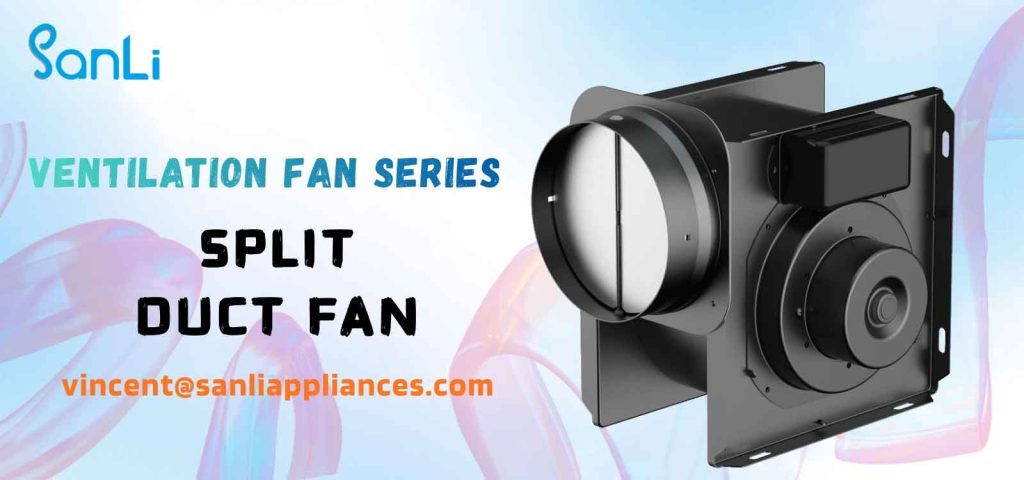
Schools and institutions require complete ventilation system solutions that deliver consistent fresh air supply, effective pollutant removal, and reliable energy performance to protect student health and maintain operational efficiency. At SanLi Appliances, we design and manufacture these systems using our range of supply ventilation fans, centrifugal fans, and axial fans specifically engineered for commercial and institutional settings. Our solutions address the unique demands of high-occupancy spaces where poor air quality can directly affect learning outcomes and staff well-being.
Why Adequate Ventilation Matters for Student Health and Academic Performance
Adequate ventilation directly improves student health and academic performance by reducing airborne contaminants and maintaining optimal carbon dioxide levels below 1,100 ppm. Classrooms with proper airflow see measurable gains in concentration, fewer respiratory issues, and higher attendance rates.
Poor indoor air quality contributes to symptoms such as headaches, fatigue, and irritation, which reduce focus and increase absenteeism. Research shows that higher ventilation rates correlate with better test scores in math and reading. For instance, districts that upgraded ventilation systems reported noticeable improvements in student outcomes. (According to EPA data on school indoor air quality).
We at SanLi Appliances have observed these benefits firsthand through our partnerships with educational facility managers. Our systems help institutions achieve air changes per hour (ACH) of five to eight during occupied periods, a key metric that supports cognitive function and reduces the spread of airborne illnesses.
Key Challenges and Pain Points in School Ventilation Systems
Many schools face persistent challenges with outdated HVAC infrastructure that fails to meet current ventilation demands, leading to elevated CO₂ levels, mold growth, and allergen accumulation. High-occupancy classrooms, gyms, and cafeterias often exceed recommended pollutant thresholds, creating discomfort and health risks for students and staff.
Facility managers frequently report issues with insufficient outdoor air intake, uneven air distribution, and high energy costs from inefficient systems. In older buildings, ductwork leaks and undersized exhaust fans exacerbate these problems, particularly in restrooms and science labs where odor and chemical control are essential.
These pain points drive the need for complete ventilation system solutions. Our experience as a leading manufacturer shows that addressing them early prevents costly retrofits and supports compliance with evolving building codes.
Regulatory Compliance and International Standards for Educational Facilities
Complete ventilation system solutions for schools must align with ASHRAE Standard 62.1-2025, which specifies minimum ventilation rates such as 15 cubic feet per minute per person for younger classrooms and includes updated humidity control and demand-controlled ventilation requirements. Compliance ensures healthier environments and avoids penalties or operational disruptions.
Institutions also reference certifications such as ISO 9001 for quality management, CE marking, RoHS, and UL standards for electrical safety. These frameworks guide our product development at SanLi Appliances, guaranteeing that every fan meets rigorous performance and safety criteria for global B2B markets.
By integrating these standards into our designs, we help product managers and R&D directors select systems that future-proof their facilities against tightening regulations.
External Link: For detailed guidance on indoor air quality programs in schools, refer to the U.S. EPA Indoor Air Quality Tools for Schools.
Designing a Complete Ventilation System for Schools and Institutions
A complete ventilation system begins with balanced supply and exhaust airflow to maintain positive or neutral pressure while removing stale air efficiently. We recommend combining our supply ventilation fans for fresh air delivery with centrifugal or axial fans for targeted exhaust in high-load areas like kitchens and auditoriums.
Energy recovery ventilators (ERVs) play a critical role by transferring heat and moisture between incoming and outgoing air streams, reducing HVAC load by up to 70 percent in many climates. This technology supports sustainability goals without sacrificing air quality.
Demand-controlled ventilation (DCV) using CO₂ sensors further optimizes performance by adjusting fan speeds based on real-time occupancy. Our QA team tests these integrations extensively to ensure seamless operation across diverse institutional layouts.
Selecting the Right Fans: Technical Specifications and Commercial Impact
Choosing the correct fans requires evaluation of airflow (CFM), static pressure capability, noise levels (sones), and energy efficiency (watts per CFM). Hyper-specific terms like total static pressure (TSP) and fan efficiency grade (FEG) directly influence long-term operating costs and system reliability in school applications.
For classrooms and corridors, ceiling-mounted models offer quiet operation and easy maintenance. Our BPT Series energy-efficient ceiling-mounted ventilation fans feature BLDC motors that deliver high airflow at low power consumption while maintaining sound levels below 1.0 sone—ideal for learning environments.
Centrifugal fans excel in ducted exhaust applications due to their high-pressure capabilities, while axial fans provide large-volume air movement for open spaces such as gymnasiums. These choices deliver measurable commercial impact through reduced energy bills and extended equipment life.
| Fan Type | Best Application in Schools | Key Specs (Typical) | Commercial Benefit | Limitations |
|---|---|---|---|---|
| BPT Series Ceiling | Classrooms, offices, libraries | 100-500 CFM, <1.0 sone, 20-50W | Quiet operation, energy savings up to 60% | Limited to low-static pressure systems |
| Centrifugal Inline | Kitchens, labs, restrooms | 200-2000 CFM, high TSP up to 2″ WC | Handles dirty air, durable construction | Higher initial cost for heavy-duty use |
| Axial Fans | Gyms, auditoriums, large halls | 1000-5000 CFM, low pressure | High-volume airflow at lower cost | Not ideal for long duct runs |
| ERV Units | Whole-building fresh air exchange | 500-5000 CFM with heat recovery | Reduces HVAC load significantly | Requires proper duct integration |
This comparison highlights how tailored selection supports both performance and budget objectives for wholesalers and distributors.
Factory Floor Insight: During our internal audits, we discovered that mismatched fan curves to actual system static pressure often reduces efficiency by 20-30 percent. Always verify duct design calculations before final specification to avoid underperformance.
Real-World Case Study: Boston Public Schools IAQ Monitoring Initiative
Boston Public Schools implemented a district-wide CO₂ monitoring network across 125 buildings in 2021-2022, collecting 245 million data points to guide ventilation upgrades. The initiative revealed that many classrooms previously operated above target CO₂ levels, prompting targeted fan and ERV installations that improved air quality and supported better learning conditions.
This real-world example demonstrates how data-driven ventilation upgrades deliver both health benefits and operational insights. Similar projects in other districts have shown reduced absenteeism and enhanced student engagement after implementing complete systems.
At SanLi Appliances, we draw on such cases to refine our solutions, ensuring our fans perform reliably in high-occupancy educational settings.
External Link: Learn more about ASHRAE ventilation standards that informed these upgrades at ASHRAE Standards 62.1.
Recommended Products for Immediate Wholesale Opportunities
For institutions seeking rapid deployment, we recommend our newly launched high-efficiency ventilation system solutions available at our dedicated resources page. These integrate seamlessly with existing infrastructure and offer superior performance for B2B projects.
The BPT Series Energy-Efficient Ceiling-Mounted Ventilation Fan stands out for school applications, providing quiet, reliable operation with advanced motor technology. Explore the full details here: BPT Series Energy-Efficient Ceiling-Mounted Ventilation Fan.
To start your wholesale business quickly, browse our complete product catalog at SanLi Appliances Products, the Ventilation Fan Manufacturer section, Axial Fan Manufacturer, and Centrifugal Fan Manufacturer pages. Our team supports fast quoting and customization for distributors worldwide.
Partnering with a Trusted Ventilation Fan Manufacturer
Successful projects depend on close cooperation with an experienced manufacturer who understands commercial demands and can deliver consistent quality at scale. This approach reduces lead times and ensures products meet exact specifications for institutional use.
We encourage decision-makers to review proven strategies for collaboration that have helped many brand owners and sourcing managers achieve project success. For detailed guidance, see our article on why need to cooperative with ventilation fan manufacturer.
When selecting components, consider choosing the right advices for ventilation fan solutions to align with your facility’s specific needs.
Installation, Maintenance, and Long-Term Performance
Proper installation begins with accurate load calculations and balanced duct design to achieve target ACH throughout the building. Our engineering support includes detailed drawings and on-site recommendations to ensure optimal airflow distribution.
Routine maintenance focuses on filter replacement, motor inspection, and airflow verification. Institutions that follow structured schedules extend equipment life and maintain peak efficiency.
Insider Tip from Our Factory Audit Director: Check belt tension and alignment on centrifugal units every six months—small adjustments here prevent premature bearing failure and maintain rated CFM output, a detail often overlooked by less experienced teams.
For restroom-specific requirements in schools, explore essential aspects of bathroom ventilation fans in building standards to ensure code compliance and odor control.
Ceiling exhaust models benefit from the latest innovations; learn more in our guide to ceiling exhaust fan buying guide for improved air quality and bathroom exhaust fan innovations that make your life easier.
Trade-Offs, Limitations, and Common Risks with Ventilation Technologies
While higher ventilation rates improve air quality, they can increase heating and cooling costs if not paired with energy recovery systems. Low-cost suppliers sometimes offer fans with lower-grade motors that fail prematurely under continuous duty, leading to unexpected downtime and higher replacement expenses.
Noise remains another consideration—axial fans may generate more sound in open spaces unless properly attenuated. Over-sizing systems without proper controls can also waste energy and create drafts that affect comfort.
At SanLi Appliances, we openly discuss these trade-offs so purchasers can make informed decisions. Our robust testing protocols minimize risks, providing trustworthy performance data for every model.
External Link: Additional insights on building ventilation standards are available from the ASHRAE Organization.
Frequently Asked Questions
What ventilation rate is recommended for school classrooms? ASHRAE 62.1-2025 recommends approximately 15 CFM per person for younger students, with adjustments for room size and occupancy. This rate helps keep CO₂ levels below 1,100 ppm and supports healthy learning environments.
How do energy recovery ventilators benefit school budgets? ERV units recover up to 70 percent of energy from exhaust air, significantly lowering utility costs while maintaining fresh air supply. Many institutions recover their investment within two to three years.
Can existing buildings be retrofitted with complete ventilation solutions? Yes. Our modular fan designs and inline duct models allow phased upgrades without major structural changes, making them practical for older institutions.
What certifications should I verify when sourcing ventilation fans? Look for ISO 9001, CE, RoHS, UL, and ETL markings to ensure quality, safety, and environmental compliance suitable for international wholesale distribution.
How does poor ventilation affect student performance? Studies link inadequate airflow to reduced cognitive function, higher absenteeism, and lower test scores. Proper systems have been shown to improve academic outcomes measurably.
Conclusion and Next Steps
SanLi Appliances stands ready to support your institution or distribution business with complete ventilation system solutions engineered for reliability and efficiency. Our 20-plus years of manufacturing expertise, combined with strict quality controls, deliver products that meet the highest E-E-A-T standards expected by CEOs, product managers, and technical engineers worldwide.
Visit our blog and resources sections for additional technical guidance and case studies that can inform your next project.
To expand your knowledge, check these related resources:
Inline Duct Fans Enhance Hospital Ventilation Efficiency (applicable insights for institutional settings)
High Efficiency Ventilation System Solution for Applications
For a quick quote or to discuss your specific requirements, please send an email to sanliappliances@gmail.com.
We look forward to partnering with you on projects that create healthier, more productive educational environments.
