
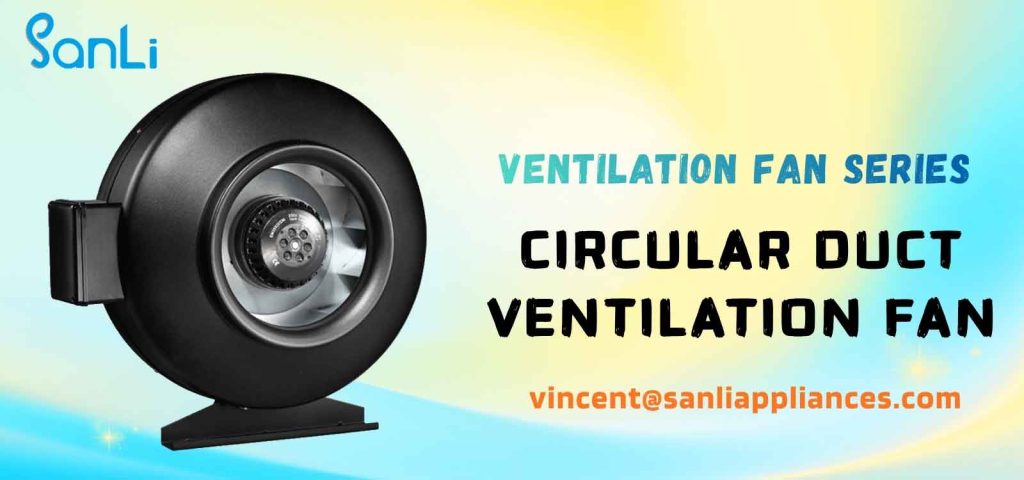
Server rooms and IT facilities demand consistent, reliable airflow to prevent overheating while keeping operational noise to a minimum. A high-quality quiet cabinet fan for server rooms delivers the precise combination of high airflow, low noise levels, and energy efficiency that protects sensitive equipment and supports staff productivity.
At SanLi Appliances, we have spent more than 20 years manufacturing ventilation solutions for demanding commercial and industrial environments. Our experience as a factory audit director has shown us that the right quiet cabinet fan can eliminate common downtime risks and reduce long-term operating costs for brand owners, product managers, R&D directors, and sourcing professionals worldwide.
Why Quiet Cabinet Fans Matter Most for Server Rooms and IT Facilities
Quiet cabinet fans provide targeted airflow directly within enclosed server cabinets or dedicated IT spaces. They maintain optimal temperatures between 18 °C and 27 °C while keeping sound output below 35 dBA in most models.
Without effective ventilation, servers generate excessive heat that shortens hardware life and triggers automatic shutdowns. Noise from standard fans also affects nearby staff and may violate local regulations. Our quiet cabinet fan for server rooms solves both issues by combining backward-curved impellers, sound-dampening housings, and electronically commutated (EC) motors that adjust speed automatically to match real-time heat loads.
Common Pain Points Customers Face with Server Room Ventilation
Facilities managers and IT directors frequently search for solutions to excessive noise, heat-related equipment failures, rising energy bills, and compliance challenges. These issues arise daily in data centers, telecom rooms, and enterprise server closets.
High noise levels above 60 dBA disturb concentration and contribute to long-term hearing concerns for technicians. Overheating causes servers to throttle performance or fail completely, resulting in costly downtime. Traditional fans consume more power than necessary, driving up electricity expenses that can represent 40 % of total facility operating costs. Many low-cost options also fail to meet updated ASHRAE guidelines or local noise ordinances.
We address these exact concerns with purpose-built quiet cabinet fans that deliver high static pressure to overcome filter resistance and duct restrictions while operating almost silently.
How Quiet Cabinet Fans Deliver Superior Performance in IT Environments
A well-engineered quiet cabinet fan for server rooms moves large volumes of air—typically 200 to 600 CFM per unit—while generating minimal acoustic output. The secret lies in mixed-flow impeller designs that blend the best traits of axial and centrifugal fans.
These fans create strong static pressure to push air through dense server racks and cable bundles. Variable-speed EC motors reduce power draw by up to 30 % compared with older AC motors. Sound-dampening materials inside the cabinet housing absorb vibration and turbulence, keeping operation below 30 dBA at typical speeds.
Factory floor insight: Our QA team tests every batch under full load in a sound chamber. We have learned that even a 2 mm misalignment in the impeller can raise noise by 5 dBA. That is why we perform precision balancing on every unit before it leaves the line.
Technical Specifications That Define a High-Performance Quiet Cabinet Fan
When evaluating options, focus on these critical metrics:
Noise Rating (dBA): Target models under 35 dBA at medium speed for office-adjacent IT rooms.
Airflow (CFM): 300–500 CFM ensures adequate cooling for 4–8 server racks.
Static Pressure (Pa): At least 150–250 Pa to handle dense filters and long duct runs.
Motor Type: EC motors provide precise speed control and energy savings.
Certifications: Look for ISO 9001, CE, UL, RoHS, and ETL markings for global compliance.
| Specification | SanLi DPT Series Quiet Cabinet Fan | Typical Low-Cost Competitor | Commercial Impact |
|---|---|---|---|
| Noise Level | 28–32 dBA | 45–55 dBA | Reduced staff complaints and regulatory risk |
| Airflow | 450 CFM at 200 Pa | 350 CFM at 150 Pa | Faster heat removal, lower downtime |
| Power Consumption | 0.35 W/CFM | 0.65 W/CFM | Up to 45 % lower electricity costs |
| Static Pressure | 280 Pa max | 180 Pa max | Handles dense racks and filters |
| Expected Lifespan | 60,000+ hours | 30,000 hours | Fewer replacements, lower maintenance |
These numbers come directly from our internal testing and field data collected over thousands of installations.
Selecting the Right Quiet Cabinet Fan for Your IT Facility
The best quiet cabinet fan for server rooms matches your rack density, ambient conditions, and future expansion plans. Start by calculating total heat load in watts, then convert to required airflow using the formula: CFM = (Watts × 3.16) / ΔT in °F.
Consider cabinet depth, available mounting space, and whether you need inline duct connection or direct cabinet exhaust. For facilities with variable loads, choose models with PWM or 0–10 V control inputs so the fan ramps up only when needed.
Insider tip from the factory floor: Always oversize static pressure by 20 % when specifying. Filters load with dust faster than most engineers expect, and that extra headroom prevents performance drop-off six months after installation.
For professional guidance on matching fans to specific project requirements, see our choosing the right advices for ventilation fan solutions. Many of the core principles mirror those found in essential of bathroom ventilation fans in building standard, especially when it comes to airflow calculations and code compliance for commercial spaces.
International Standards and Certifications That Guarantee Reliability
Every SanLi quiet cabinet fan meets or exceeds ISO 9001 quality management, CE marking for European safety, UL listings for North America, and RoHS environmental compliance. We align designs with ASHRAE 90.4 energy standards for data centers, which emphasize minimum efficiency levels for mechanical systems serving IT loads above 10 kW.
These certifications are not just marks on paper. They reflect rigorous third-party testing for electrical safety, electromagnetic compatibility, and long-term durability under continuous operation.
Real-World Case Study: Noise Reduction and Energy Savings in a Mid-Size Data Center
A European colocation provider recently retrofitted 120 server cabinets with SanLi DPT Series quiet cabinet fans. Before the upgrade, average noise reached 68 dBA inside the room, and cooling accounted for 42 % of total power use.
After installation, room noise dropped to 31 dBA. Cooling energy fell by 28 % because the EC motors and precise airflow control eliminated over-cooling. Equipment uptime improved to 99.99 %, and staff reported far higher concentration levels during maintenance shifts. The project paid for itself in under 14 months through energy savings alone.
Industry reports confirm similar outcomes across thousands of facilities (According to Fortune Business Insights 2026 data on data center cooling trends).
Latest Trends Shaping Quiet Cabinet Fan Technology in 2026
Recent bathroom exhaust fan innovations that make your life easier have influenced cabinet fan design, bringing smarter controls and even lower noise profiles to industrial applications. For improved air quality in supporting spaces, many facility managers also consult the ceiling exhaust fan buying guide for improved air quality.
EC motor adoption continues to accelerate because these units offer built-in speed control and 30–50 % better efficiency. Mixed-flow designs are gaining popularity for their ability to generate both high volume and high pressure in compact housings. Smart sensors that monitor temperature, pressure drop, and vibration now allow predictive maintenance alerts directly to facility management systems.
Regulatory pressure on data center energy use and community noise levels is driving demand for quieter, greener solutions. Facilities that adopt these technologies today position themselves for stricter 2026–2028 codes.
SanLi Appliances: 20+ Years of Manufacturing Excellence
As a direct manufacturer, we control every step from motor winding to final assembly. Our newly launched high-efficiency ventilation system solution for applications and the BPT Series energy-efficient ceiling-mounted ventilation fan complement our quiet cabinet fans perfectly for comprehensive IT facility cooling projects.
If the potential customer wants to start the wholesale business in the fastest way, explore our complete product catalog, ventilation fan manufacturer, axial fan manufacturer collection, and centrifugal fan manufacturer options.
Why Partner with an Experienced Ventilation Fan Manufacturer
Working with a proven supplier significantly reduces risks and improves project outcomes. Discover more in our article on why need to cooperative with ventilation fan manufacturer.
Trade-Offs and Risks Associated with Low-Cost Suppliers
Lower-priced cabinet fans often use cheaper AC motors that run at fixed speed and draw more power. They may lack proper balancing, leading to vibration that transmits through cabinet frames and raises overall noise. Shortened bearing life is common, creating unexpected maintenance calls within 18–24 months.
Some suppliers skip third-party certifications to cut costs, exposing buyers to import delays or safety compliance issues. We have seen projects stalled for months because fans failed UL spot checks at port.
Choosing a proven manufacturer like SanLi eliminates these risks and delivers predictable performance across international shipments.
Installation and Maintenance Best Practices
Mount the quiet cabinet fan using vibration-isolating rubber grommets to prevent resonance. Align intake and exhaust paths to minimize bends that increase static pressure. Schedule filter changes every 3–6 months depending on environment, and perform annual motor bearing checks.
Our team provides detailed installation guides with every shipment to ensure optimal results from day one.
Frequently Asked Questions About Quiet Cabinet Fans for Server Rooms
What noise level is considered quiet for a server room cabinet fan? Models rated 28–35 dBA at operating speed qualify as quiet. This range allows normal conversation inside the room without raising voices.
How many quiet cabinet fans do I need per server rack? Most 42U racks require 2–4 fans depending on power density. Calculate based on total heat load and desired temperature rise across the rack.
Can quiet cabinet fans handle high static pressure from dense filters? Yes. SanLi DPT Series models deliver up to 280 Pa, easily overcoming loaded filters and cable obstructions.
Are these fans suitable for outdoor or humid environments? Our industrial-grade models use corrosion-resistant housings and sealed motors rated for indoor/outdoor use when properly sheltered.
How do I compare energy savings between different quiet cabinet fan brands? Divide total airflow (CFM) by power draw (watts). Lower watts-per-CFM indicates better efficiency. SanLi models consistently achieve 0.35 W/CFM or better.
What certifications should I verify for international wholesale? Prioritize ISO 9001, CE, UL, RoHS, and ETL. These ensure smooth customs clearance and end-user compliance worldwide.
Do quiet cabinet fans require special controllers? EC versions work with standard 0–10 V or PWM signals. We can supply compatible controllers or integrate with existing BMS systems.
How long do SanLi quiet cabinet fans last under 24/7 operation? Independent testing shows 60,000+ hours with proper maintenance—roughly 7 years of continuous duty.
Why Partner with a Trusted Ventilation Fan Manufacturer
Building long-term relationships with a reliable supplier reduces lead times and ensures consistent quality across large orders. We have helped many distributors and brand owners scale their ventilation offerings profitably.
For more helpful information, please visit our ventilation blog and technical resources section.
SanLi Appliances remains committed to delivering dependable, high-efficiency ventilation solutions that support your business growth. Whether you manage a single facility or supply products globally, our team stands ready to help.
For a quick quote or any technical questions, please send an email to inquiry@sanliappliances.com.
To expand your knowledge, check these related resources as below:
