

Key Takeaways
Pick the to help them last longer and save money. Metals like aluminum and stainless steel are strong and do not rust easily, so they work well in tough places. Plastics like ABS and polypropylene are light and cheap, so they are good for homes and small businesses. Composites like fiberglass are very tough in hard conditions, so you will not need to fix them often. Think about things like humidity and temperature when you pick fan materials to help them last longer. Good materials may cost more at first, but you will spend less on fixing or replacing fans later. Learn about new ideas and green choices to help the environment with your fans. Always pick the right fan material for the job to make sure it works well where you use it.
Materials Used in Ventilation Fans
When picking ventilation fans, you should know what materials are used. The right materials can make fans work better and last longer. They also help you save money. Today, companies use metals, plastics, and composites for different needs.
Note: and energy-saving technology. This helps make the air inside cleaner. It also cuts down on energy use and costs. You get products that are safe and good for the environment.
Metals
Metals are important in making ventilation fans. They give fans strength and keep them steady. This is helpful in tough places.
Aluminum
Aluminum is often used for fan housings and blades. It is light and easy to move. It does not rust, so it is good for wet places. Aluminum helps with heat, so it is great where temperature matters. But, it usually costs more than other materials.
Steel
Steel is very strong and can take high heat. It is good for heavy-duty or industrial fans. Stainless steel is even better because it does not rust easily. It works well in places like factories or kitchens with lots of moisture or chemicals.
Plastics
Plastics are common in fans because they are cheap and easy to shape. They also make fans lighter.
ABS
ABS is a strong plastic. It does not break easily and looks smooth. It is good for home and business fans where looks and price matter. ABS also does not get damaged by chemicals.
Polypropylene
Polypropylene is another plastic used a lot. It is light and does not soak up water. It also stands up to many chemicals. You can use it in fans for bathrooms or kitchens. Polypropylene is not expensive and works well for daily use.
Composites
Composites mix two or more materials to make something better. They are useful for special jobs.
Fiberglass
Fiberglass is strong and light. It is used in fans that need to fight rust and tough conditions. It is good for factories where metal might rust.
Hybrid Materials
Hybrid materials mix plastics, fibers, or metals. This gives fans the best mix of strength, weight, and resistance. Companies use these for custom fans that need to last long and work well.
Common Materials and Their Characteristics
the most common materials in ventilation fans:
| Material | Characteristics |
|---|---|
| Aluminum | Lightweight, corrosion-resistant |
| Stainless Steel | Strong, durable in harsh environments |
| Polycarbonate | Lightweight, impact-resistant, aesthetically pleasing |
| Advanced Composites | Explored for specific needs |
Industry Trends in Material Selection
It is good to know the latest trends in fan materials. These trends change how fans work and how much they cost:
Aluminum is still a good choice for fan frames and heat control, but it costs more.
Plastic is cheaper, but it may not last as long as metals.
Steel is strong and can take high heat.
.
, but they also make them cost more.
Companies like SanLi Appliances keep looking for better composites and eco-friendly materials. These new ideas help fans use less energy and meet strict rules for the environment.
If you know about the materials in ventilation fans, you can choose the best one for your needs. This helps you get good performance, long life, and a fair price.
Material Choices: Durability vs. Cost
When you , you should think about the materials. The materials change how long your fans last and how much they cost. Good materials help fans work better and last longer. They also help you save money over time. This matters for factories, stores, and homes.
Corrosion Resistance
Corrosion can hurt fans and make them break sooner. You want fans that can handle tough places, especially where there are strong chemicals.
Metals Performance
Metals like aluminum and stainless steel do not rust easily. Aluminum makes a layer that protects it from rust. Stainless steel has chromium, which stops rust. These metals are good for wet places, like food factories or near the ocean.
| Material Type | Corrosion Resistance Characteristics | Applications |
|---|---|---|
| Aluminum Alloys | Natural oxide layer gives protection; anodizing makes it even better. | Good for wet or harsh places |
| Stainless Steel | Very good at stopping rust because of chromium; great for food and ocean use. | Food factories, medicine |
| Polypropylene | Stops chemical damage; works in tough air. | Chemical plants, ocean |
| Glass-Fiber Reinforced Polymers | Stops rust and keeps its shape; not heavy. | Tough places |
| Carbon Fiber Reinforced Polymers | Strong but light; good for big fan blades. | Many factory jobs |
| Metal Matrix Composites | Mixes metals with ceramics to stop rust. | Extreme places |
Plastics & Composites
Plastics like polypropylene do not rust and can handle many chemicals. Composites like fiberglass also do well in tough places. You can use these when metal might not work. For example, fiberglass fans do not react with acids or bases. They stay strong and light, even when things get rough.
Fiberglass fans are a great choice instead of metal fans. Fiberglass does not react with most chemicals, acids, or bases. This means it will not rust or break down, even in places where metal fans would not last. It is also strong but lighter than steel, and just as tough.
Wear and Tear
Fans get worn out from being used a lot. The materials you choose change how long your fans last and how often you need to fix them.
Mechanical Stress
. Using fans a lot can make the materials weak. Dust in the air can also wear down the blades. If dust builds up on one side, the fan can shake and wear out faster. Bad wear can even break the blades, which is dangerous.
Bearings and blades get worse over time from use.
Using fans a lot can make the parts weak.
Rust from tough places can make fans work badly.
.
Dust on one side makes the fan shake and not last as long.
Bad wear can break blades and cause safety problems.
Continuous Use
How long a fan lasts depends on the materials and how you use it.
in factories.
In normal places, axial fan blades can last up to 15 years.
Metal fans last longer and are stronger than plastic fans.
If you use fans all the time, you need strong materials. Metal and fiberglass fans last longer and need fewer repairs. This saves you money because you do not have to fix or buy new fans as often.
Environmental Factors
Where you use your fan is important. Humidity and temperature can change how well your fan works and how long it lasts.
Humidity
High humidity can make metal fans rust if they are not protected. Plastics and composites do not rust, so they are good for wet places. SanLi Appliances tests all fans in wet rooms to make sure they last. The company also checks every fan in fake wet places to make sure the motors and seals work well.
| Evidence Description | Details |
|---|---|
| Humidity Chamber Testing | SanLi fans are tested in wet rooms to make sure they last. |
| Quality Assurance Testing | The team checks every fan in fake wet places (95% RH at 40°C) to make sure the motor and lights work before shipping. This stops problems that cheap fans can have. |
Temperature
High heat can hurt some plastics. Plastics that do not handle heat can bend or break. Metals and special composites can take more heat. If you use fans in hot places, pick materials that can handle the heat.
.
Plastics that do not handle heat can bend in hot places.
These problems can make fans not work well or break.
When you pick materials, think about where you will use the fan, what the housing and blades do, how much air you need, noise, and how much it costs to keep the fan working.
SanLi Appliances: Quality and Reliability
SanLi Appliances checks every fan to make sure it works well. The company has many awards, like CE, RoHS, UL, and ETL. These show that SanLi fans are safe and work well. SanLi also , and TUV and SGS checks. You can trust SanLi fans to last and work well, even in tough places.
| Evidence Description | Details |
|---|---|
| Certifications | All SanLi fans have CE, RoHS, UL, and ETL marks, showing they meet world rules. |
| Compliance Certifications | Passed ISO 9001, 14001, 27001, CE CB, SASO, RoHS, TUV, and SGS checks. |
When you pick the right materials, your fans last longer, cost less, and work better. This helps your fans do a good job in any place, like factories, stores, or homes.
Cost Implications of Materials
When you pick ventilation fans, you need to think about cost. The materials you choose change what you pay now and later. You want fans that work well, last long, and are worth your money.
Initial Cost
Price Comparison
Fans made from different materials have different prices. Some fans cost more at first but save money later. :
| Fan Type | Initial Cost | Long-term Cost Considerations |
|---|---|---|
| FRP Fans | Higher | Save money because they last and need less fixing |
| Metal Fans | Cheaper | Can cost more if you need to fix them in tough places |
FRP fans cost more at the start, but they last longer and need fewer repairs. Metal fans are cheaper at first, but you might spend more if you use them where there are lots of chemicals.
Manufacturing Costs
The materials and design of the fan change how much it costs to make. Here are some things that change the cost:
.
Some materials work better in certain places.
Harder designs can make fans cost more to make.
Aluminum lets you make special shapes, but thick or strong parts cost more.
Molded composites give more design choices and work better, but cost more to make.
, but use more material and cost more.
Maintenance & Replacement
Repair Frequency
You want fans that do not break a lot. If you pick good materials, you will fix your fans less. Metal fans may need more repairs in tough places. FRP and polypropylene fans do not rust, so you do not need to fix them as much.
Replacement Cycle
Fans made from strong materials last longer. This means you do not have to buy new fans often. Polypropylene and fiberglass fans last a long time. You save money because you do not need to replace them as much as metal fans in harsh places.
Energy Efficiency
Material Impact
. Metal fans are strong and good for hard jobs. Plastic fans are light and do not rust, so they use less energy. Composites work well in tough places and help fans use less power. Good materials help fans work better and use less energy.
Long-Term Savings
. These fans use less energy and need fewer repairs. You do not have to stop work to fix or replace fans. Over time, you will spend less money and get better results.
Tip: When you pick materials, think about the total cost, not just the price at first. Good materials give you better quality, last longer, and cause fewer problems.
Balancing Material Choices
Best Practices
Application Needs
You should pick materials that match where you use the fans. For homes, choose materials that are light and quiet. In stores, pick materials that can handle lots of use and do not wear out fast. Factories need strong materials that can take high heat and chemicals. SanLi Appliances lets you . You can use . For stores and factories, use galvanized steel or aluminum. This helps your fans last longer and work better.
Environmental Considerations
Think about where you will put your fans. Humidity, heat, and chemicals can change how long fans last. In tough factory places, stainless steel or fiberglass work well. For homes and offices, plastics keep out water and last longer. Picking the right material keeps your fans working and saves money.
Tip: Always check the place before picking materials. This stops extra costs and makes sure your fans work well.
| Material Type | Advantages | Disadvantages |
|---|---|---|
| Metal | Strong, handles heat well | Heavy, harder to install |
| Plastic | Light, does not rust | May break in tough places |
| Composite | Strong and light | Needs careful handling |
Selection Tips
Budget Options
You can save money by picking materials that fit your budget. ABS plastic is good for home fans. It is cheap and does not rust. Polypropylene is a good choice for store fans. It gives you both good price and lasts longer.
High-Performance Choices
If you need fans to work really well, pick metals or composites. Aluminum and galvanized steel are strong for stores and factories. Fiberglass composites last a long time in tough places. SanLi Appliances lets you pick what you need for special jobs. You get fans that work well and last longer.
Check to pick the right fan.
Find out how much air you need to move.
Look at all costs, like buying, installing, and fixing.
Case Studies
Residential Fans
A homeowner picked ABS plastic fans for the bathroom. The fans kept out water and lasted many years. This choice made fixing easier and helped the air stay clean.
Industrial Fans
A in operating rooms. The fans had old filters and dirty coils. After using better materials and fixing things often, the hospital got better air and longer fan life. The right materials helped stop infections and kept things running.
Note: SanLi Appliances helps you pick custom materials for homes and factories. You can choose what fits your place and budget. This makes your fans work well and last longer.
Industry Trends in Materials
The is changing fast. New materials and better ways to make fans are helping fans last longer. Fans also work better and are safer for the environment.
Emerging Materials
Eco-Friendly Options
Many companies want to help the planet. They make fans with biodegradable materials. These materials break down safely and do not hurt nature. . They use . This means you can pick fans that use less energy and are better for the earth.
Biodegradable materials cut down on waste.
More companies use eco-friendly designs.
Fans now have motors that save energy.
People want products that use less energy and are good for nature.
Picking eco-friendly fans helps make the world cleaner and greener.
Advanced Composites
Advanced composites are changing how fans are made. These materials mix fibers and plastics to make strong, light parts. Fans made with these weigh less and last longer. Advanced composites also fight rust and chemical damage. They help fans keep their speed and shape for many years.
Here is a table that compares advanced composites to stainless steel:
| Metric | Advanced Composites | Traditional Materials (Stainless Steel) |
|---|---|---|
| Weight Reduction | 30% | N/A |
| Corrosion Resistance | 50% less | N/A |
| Energy Savings | 25% | N/A |
| Longevity | 15-20 years | 7-10 years |
| Speed Maintenance | 95% original speed | 15-20% speed loss over 5 years |
| Wear on Moving Parts | 90% less wear | N/A |
| Loosening Issues | 5x longer torque retention | 80% more loosening issues |
. They also reduce wear and tear. You do not need to fix or replace fans as often.
Manufacturing Innovations
Durability Improvements
Manufacturers use better tests and smarter designs to make fans last longer. . They stay strong and work well in hard places. Plastic fans are popular for homes and businesses. They are light and easy to install. These new choices give you more options for different needs.
Fans made with advanced materials can last up to 20 years, even in tough places.
Cost Reduction
New ways to make fans help lower costs for you. Lightweight plastics and composites mean cheaper shipping and easier setup. Companies use less material but keep fans strong. This helps you save money when you buy and use fans. You also spend less on repairs and energy bills because these fans work more efficiently.
If you pick fans made with new materials, you get better performance and save money over time.
Choosing Materials for Your Needs
Decision Framework
Picking the right material for your ventilation fan is important. You want your fan to last a long time. It should work well and not cost too much. A simple way to decide is to compare your choices. Look at how each material fights rust, how heavy it is, how much it costs, and where it works best. do in different places:
| Material | Corrosion Resistance | Weight | Relative Cost | Best Application |
|---|---|---|---|---|
| Aluminum alloy, powder coated | Moderate; coating-dependent | Low | Base reference | Engine rooms, internal spaces |
| Stainless steel 316 | Excellent; inherent | High | 2.0 to 2.5× aluminum | Open decks, topsides, splash zones |
| GRP (glass-reinforced polyester) | Excellent; chemical-resistant | Low | 1.5 to 2.0× aluminum | Highly corrosive, weight-sensitive applications |
Long-Term Value
You should always think about how long your fan will last. Some materials cost more when you buy them. But they save you money later. Stainless steel and GRP do not rust or get hurt by chemicals. These materials are good for tough places and need fewer repairs. You do not have to fix or replace your fan as much. This means you get more value over time.
Application Match
Pick the material that fits where you will use the fan. Aluminum is good for inside buildings. Stainless steel is best for outside or wet places. GRP is great for places with lots of chemicals or salt in the air. If you choose the right material, your fan will work better and last longer.
Common Mistakes
Environmental Oversights
Many people forget to check the place before picking a fan. This can cause big problems later.
exhaust ventilation equipment works in tough places. Regular metals are fine for places without chemicals. But they can get damaged by chemicals, water, or strong air in factories.
Polypropylene stands up to acids, bases, and chemical vapors.
It works well in wet and tough places.
The material does not rust or get weak over time.
Maintenance Underestimation
Some people do not think about how much care their fan will need. This can lead to more repairs and higher costs. Here are some mistakes you should not make:
Buying the wrong size fan can make the air move badly and cause more noise.
Picking the wrong type of fan for your space can break the fan or waste energy.
Choosing just by price can mean you buy new fans more often and spend more money.
New exhaust ventilation equipment is made to last a long time, not just for short-term use. Fans made for tough air need less fixing, break down less, and last longer.
If you plan ahead and pick the right material, you will not make these mistakes. Your fan will last longer, work better, and save you money.
When you pick materials for ventilation fans, you decide how long they last and how much you pay. Good materials and trusted certifications make fans work well and clean your air. You should look for these marks:
ISO 9001:2015 certifications
BBA Certification and CE/UKCA markings
Meets Part F and Part L of the Building Regulations
Check this table to see what fits your needs:
| Material | Best For | Avoid In | Cost Index |
|---|---|---|---|
| Aluminum | Light industrial | Humid areas | $$ |
| Galvanized Steel | Factories | Chemical plants | $ |
| FRP | Chemical labs | High-heat zones | $$$ |
| Stainless Steel | Coastal/Outdoor | Budget projects | $$$$ |
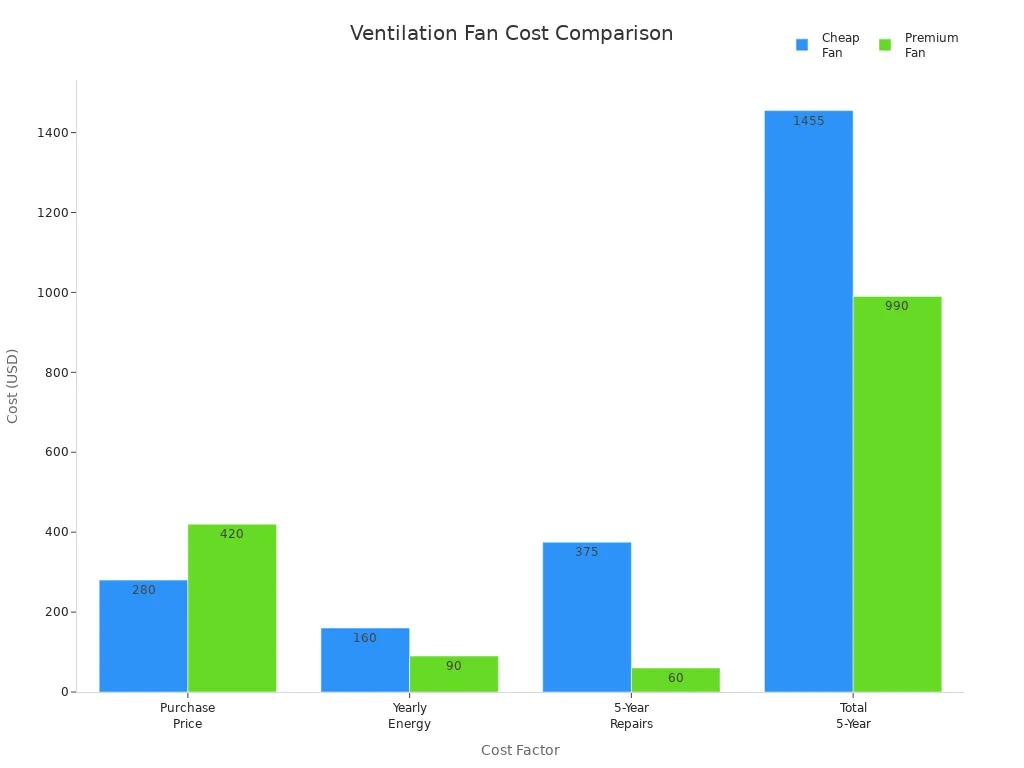
You should think about how much you spend now and later. Picking smart materials means your fans last longer, use less energy, and keep your air safe.
FAQ
What materials make exhaust fans last longer?
if you pick stainless steel, aluminum, or fiberglass. These materials do not rust or wear out fast. They help your fan stay strong and work well. You will not need to fix or replace your fan as often. This saves you money in the long run.
How do materials affect fan cost?
Fans made from metals like stainless steel or advanced composites cost more at first. These materials last longer and do not need many repairs. If you pick the right material for your fan and where you use it, you can control how much you spend.
Which fan material works best in humid places?
For humid areas, use polypropylene, fiberglass, or stainless steel fans. These materials do not get damaged by water. They keep the air moving and stop rust. Your fan will last longer in wet places.
Can plastic fans handle strong chemicals?
Polypropylene or fiberglass fans are good for places with strong chemicals. These materials do not get hurt by acids or bases. They keep your fan safe and working well. You will not have to fix your fan as much, so you save money.
How does material choice impact operational efficiency?
If you pick light materials like aluminum or advanced composites, your fan works better. These materials help your fan move more air and use less energy. You get lower energy bills and better airflow.
What is the best way to control fan maintenance costs?
Pick materials that do not rust or wear out fast. Stainless steel and fiberglass fans need fewer repairs. Your fan will keep working well, and you will spend less money fixing it.
Do all exhaust fans work well in high temperatures?
Metal fans like aluminum or steel are best for hot places. These materials do not bend or break in heat. Plastic fans might melt or change shape. Metal fans give you steady airflow and do not cost extra to fix.
How do I choose the right fan material for my space?
