

Key Takeaways
Always check for important , and HVI. These certifications make sure the fans are safe and work well.
Look for CE marking if you want to sell fans in Europe. This marking shows the fans follow health and safety rules.
ISO 9001 accreditation means the supplier cares about quality management. Pick suppliers with this certification for dependable products.
ENERGY STAR certification helps you save money on energy bills. Fans with this label use less energy and are better for the environment.
RoHS compliance means the fans do not have dangerous substances. This keeps people and the environment safe.
Check your suppliers’ certifications often. This helps keep your projects safe and follows the rules.
Use a checklist to ask for certification papers and test results from suppliers. This makes your buying process neat and easy to track.
Buying certified fans may cost more at first but saves money later. You will use less energy and need fewer repairs.
Key Certifications for Ventilation Fan Suppliers
UL Certification
Safety and Compliance
You should look for UL certification when picking a . UL is Underwriters Laboratories, a well-known safety testing group. UL certification shows the product follows strict safety rules. For ventilation fans, is the main standard. This standard checks for fire dangers and electrical problems.
Here is a quick overview:
| Certification Type | Standard | Description |
|---|---|---|
| UL Certification | UL507 | Recognized safety standard for electrical and mechanical safety in ventilation fans. |
UL certification helps meet local building rules. You can use UL listed fans in projects needing engineering approval. This certification lowers the chance of customs problems when importing. If you see a UL mark, the product passed tough safety tests and factory checks.
SanLi Appliances has many UL certified fans. This means you get products that meet top safety standards. You can trust these fans for homes and businesses.
ETL Certification
Product Testing Standards
ETL certification is another important mark to check for. Intertek is a global safety testing company that gives the ETL mark. ETL listed fans meet the same UL507 standard as UL certified fans. Both certifications focus on safety and performance, but different groups issue them.
Here is a comparison:
| Certification | Organization | Purpose | Testing Frequency |
|---|---|---|---|
| UL | Underwriters Laboratories | Safety testing for fire and electrical risks | Initial and ongoing testing with factory audits |
| ETL | Intertek | Safety testing for fire and electrical risks | Initial and ongoing testing with factory audits |
ETL certification means the product passed strict safety and performance tests. You can use ETL listed fans in projects needing proof of safety. Many building codes accept ETL and UL marks as equal. SanLi Appliances offers both UL and ETL certified fans, so you can meet project needs in different places.
HVI Certification
Performance Verification
HVI certification stands for Home Ventilating Institute. This certification checks performance. HVI tests fans for airflow, sound, and energy use. You want your ventilation fan to give the airflow it promises and work quietly.
The table below shows the for different ventilating fans:
| Ventilating Fan Type | Maximum Allowable Sound Level (Sones) |
|---|---|
| Range Hoods — ≤ 75 W | 2.0 |
| Bathroom and Utility Room Fans — 10 to 89 CFM | 2.0 |
| Bathroom and Utility Room Fans — 90 to 200 CFM | 2.0 |
| Bathroom and Utility Room Fans — 201 to 500 CFM (max speed) | 3.0 |
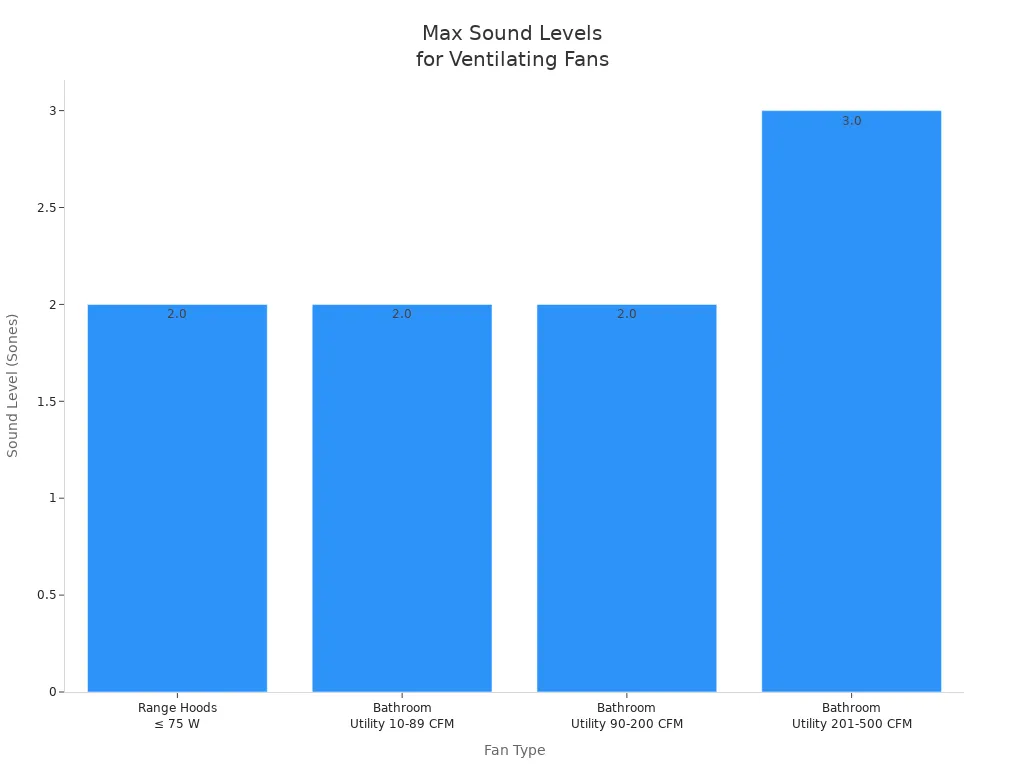
HVI certified fans must give tested airflow at certain pressures. This means you get reliable performance in real life. HVI certification also checks that the fan does not go over noise limits, so you get a quieter space. SanLi Appliances has HVI certified models, so you can trust their performance and comfort.
Tip: Always ask for HVI certification if you want to check the real performance of a ventilation fan.
By checking these key certifications—UL, ETL, and HVI—you make sure your ventilation fan supplier meets top safety, compliance, and performance standards. This keeps your projects safe and gives you peace of mind.
CE Marking
International Market Access
You should look for if you want to sell fans in Europe. CE marking means the fans follow important European rules for health, safety, and the environment. This mark is not just a sticker. It is needed by law for products sold in the European Economic Area. When you see CE marking, you know the product passed strict tests and follows the rules.
CE marking lets you sell in more places. It helps you enter the European Union and other countries with the same rules. The table below shows how CE marking helps you sell in other countries:
| Evidence Type | Description |
|---|---|
| CE Marking | A required certification that shows products meet safety and environmental rules. |
| Market Access | Makes companies create fans that fit local rules. |
| Compliance Standards | Very important in places with tough rules for selling products. |
SanLi Appliances sells fans with CE marking. This means you can trust their fans to have the right certifications for selling around the world. CE marking also helps you avoid problems at customs and legal trouble when you import or export fans.
ISO 9001 Accreditation
Quality Management
ISO 9001 accreditation is another important thing to check for in a fan supplier. ISO 9001 is a worldwide rule for quality management. It shows the company has good ways to make and check their products. If a supplier has ISO 9001, you know they care about quality all the time.
You want your fans to work well and last long. ISO 9001 helps make sure this happens. This rule covers how a company trains workers, uses tools, and picks materials. It also checks how they listen to customers and fix problems. SanLi Appliances has ISO 9001, so you can trust they always try to get better and keep quality high.
ENERGY STAR Certification
Energy Efficiency
ENERGY STAR certification means a fan saves energy and lowers your bills. You should look for this label if you want to use less power and help the planet. To get ENERGY STAR, products must follow special rules. The steps are:
Products must follow certain rules to get the ENERGY STAR label.
Companies must agree to follow ENERGY STAR rules.
In-line fans made as supply fans can get certified.
You need to talk to an EPA-approved group to check if your product can get ENERGY STAR. The ENERGY STAR website lists these groups. Many top brands, like , have fans with ENERGY STAR. This shows that saving energy is becoming more popular.
SanLi Appliances sells fans that meet ENERGY STAR rules. You can trust these fans to help you save energy and reach green building goals. When you pick fans with ENERGY STAR, you help make the future cleaner and more efficient.
RoHS Compliance
Environmental Safety
It is important to check for RoHS compliance when picking a ventilation fan supplier. RoHS means Restriction of Hazardous Substances. This rule keeps people and nature safe from dangerous stuff in electrical products. RoHS is important for fans because it controls bad heavy metals in the parts.
RoHS compliance has some main points:
It stops the use of in electrical and electronic equipment.
It is needed if you want to sell in Western places like Europe and North America.
Buying from RoHS-compliant factories helps protect the environment.
RoHS is very important for keeping harmful heavy metals out of inline fan parts.
It helps products meet green rules for big projects in companies and the government.
When you pick RoHS-compliant fans, you help keep people and the planet safe. Many jobs need RoHS compliance before they get approved. SanLi Appliances sells fans that follow RoHS rules. You can trust these fans to be safe and good for the environment.
Other Relevant Certifications
EN 1201-3, SASO, CB, EMC, LVD, CCC
You should also check for other certifications when choosing a ventilation fan supplier. These certifications help you follow rules in different places. They show the fans passed hard tests and meet important standards.
Here are some main certifications:
EN 1201-3: This European rule checks if fans are safe and work well.
SASO: You need this to sell fans in Saudi Arabia. It makes sure fans are safe and good quality.
CB: The CB scheme helps you sell fans in many countries. It shows the fans passed international tests.
EMC: EMC checks that fans do not mess with other electronics. This is important for homes and businesses.
LVD: LVD means Low Voltage Directive. It makes sure fans are safe with low voltage power.
CCC: CCC is the China Compulsory Certification. You need it to sell fans in China and it proves the fans meet China’s rules.
You need these certifications to sell in places with strict rules and to stay out of trouble. SanLi Appliances has many certifications like ul, etl, hvi, and more. This means you get fans that pass tough tests and meet high standards. You can use these fans in lots of countries and for many projects.
Tip: Always ask your supplier for a full list of certifications. This helps you make sure the fans follow the rules and keeps you safe.
Why Ventilation Fan Certifications Matter
Safety Assurance
You should check before buying. These certifications keep you safe from legal and quality problems. Certified products lower the risk of accidents. Uncertified fans can cause big issues. They might lead to fire or electrical dangers. You cannot use these fans for business in the US. Companies using uncertified fans can get in trouble if something bad happens. You want to stay safe and avoid blame.
Uncertified fans break safety rules for electricity and fire.
You cannot sell or use them for business in the US.
You could get sued if accidents happen.
Safety problems are worse without certifications.
Certifications help you feel safe. You know the fans passed hard tests. You can trust them to protect your building and people.
Regulatory Compliance
You must follow project rules and building codes when installing fans. Certifications help you meet these rules. You need certified fans in places with strict laws. Building codes often ask for certified products. You cannot pass checks without them. Certifications also help you save energy.
| Metric | Description | Impact on Compliance |
|---|---|---|
| Fan Energy Index (FEI) | A way to use less electricity in fan systems. | Helps meet energy rules in building codes. |
| ASHRAE 90.1 | A guide for business energy codes. | Uses FEI to pick good fans. |
You want your fans to fit your project. Certifications make this happen. You avoid delays and extra costs. You also keep your good name as a trusted worker or manager.
Performance and Reliability
You want your fans to work well. Certifications show the fans do what they promise. You get good airflow, save energy, and have quiet fans. Certified fans go through tough tests. You can trust them to work in real life. You avoid broken fans and recalls. You also keep your vents and cleaning easy. Certifications show the supplier cares about quality and getting better.
When you pick certified fans, you get value for a long time. You need less fixing and get better air inside. You also help the planet. Certifications help you reach green goals and make clients happy. You build trust with every job.
Market Access
You want your ventilation fans to reach as many markets as possible. Certifications open doors for your products. They help you sell in different countries and regions. Each market has its own rules. If your fans have the right certifications, you can ship them almost anywhere.
Many countries require special marks before you can sell or import fans. For example, you need CE marking for Europe, UL or ETL for North America, and CCC for China. These marks show that your fans meet local safety and quality rules. Customs officers check for these marks. If your fans do not have them, they may stop your shipment or send it back.
Here is a simple table to show which certifications you need for different markets:
| Market/Region | Required Certification(s) |
|---|---|
| Europe | CE, RoHS, EN 1201-3 |
| North America | UL, ETL, HVI, ENERGY STAR |
| Middle East | SASO, GCC |
| China | CCC |
| Global (multi-region) | CB, EMC, LVD |
Tip: Always ask your supplier for proof of these certifications before you order. This helps you avoid delays and extra costs.
Certifications also help you win more projects. Many customers and contractors only buy certified fans. They want to make sure the products are safe and legal. If you use certified fans, you can join more bids and get more business.
You also avoid legal problems. Some countries have strict rules. If you sell uncertified fans, you may face fines or lose your business license. You want to protect your company and your reputation.
SanLi Appliances gives you a strong advantage. The company has fans with many certifications, such as CE, UL, ETL, RoHS, SASO, and CCC. You can use these fans in many countries without worry. This makes your work easier and helps you grow your business.
Certifications do more than prove quality. They help you reach new customers and markets. You can expand your business with less risk. Always check for the right certifications before you choose a supplier. This simple step can save you time, money, and trouble.
Supplier Accreditations and Quality Systems
When you pick a ventilation fan supplier, you want to know they have good credentials. These credentials show the company follows strict rules for making safe products. Supplier accreditations help you trust the company for a long time. They prove the company cares about quality and the environment.
ISO 9001 and ISO 14001
You should check if your supplier has ISO 9001 and ISO 14001 certifications. to make sure products meet customer and legal needs. This certification shows the company works hard to improve quality all the time. You can trust that your fans will work well and last longer.
ISO 14001 is about caring for the environment. This certification gives the company a plan to manage how their work affects nature. It helps them use less energy, reduce waste, and keep the air clean. The company checks their progress and tries to get better every year. When you buy from a supplier with ISO 14001, you help support a greener future.
is a good example. The company has both ISO 9001 and ISO 14001 certifications. You can see their promise to quality and the environment in every product.
ISO 9001 makes sure products meet customer and legal needs.
The company always tries to improve.
ISO 14001 helps manage and improve how the company affects nature.
The company uses a system to track and lower their impact on the environment.
Factory Audits (TUV, SGS)
You should look for suppliers that pass factory audits by groups like TUV and SGS. These audits check if the factory follows safety, quality, and environmental rules. Auditors visit the factory, watch how things are made, and check records. If the supplier passes, you know they meet high standards.
SanLi Appliances has passed TUV and SGS audits. This means you can trust their products and how they work. You feel safe knowing your supplier has strong credentials.
Traceability and Continuous Improvement
Traceability means you can follow every part of the fan from start to finish. If there is a problem, you can find out where it started. Good suppliers keep records for every step. This helps fix problems fast and keeps customers safe.
Continuous improvement is important too. The best suppliers always look for ways to get better. They listen to feedback, check their work, and make changes when needed. This attitude helps you get better products every time you order.
SanLi Appliances uses traceability and continuous improvement in their work. You can count on them to deliver fans that meet your needs and keep getting better.
Tip: Always ask your supplier about their accreditations and quality systems before you buy. This helps you pick a partner you can trust for many years.
Certification Checklist for Procurement
What to Request from Suppliers
You should have a simple checklist when picking . This helps you make good choices and avoid problems. Ask each supplier for these things:
Certification papers for every fan model, like UL, ETL, CE, HVI, ISO 9001, , RoHS, and other needed marks.
Product test results that show the fan is safe and works well.
Warranty details. Make sure the warranty is at least one year.
Information about how well the fan works and how loud it is. These numbers show if the fan meets ENERGY STAR and HVI rules.
Data on how the fan works after it is installed. Check if the fan does what it should in real life.
Details for fans with more than one speed. Each speed must follow the rules.
Range hood setup information. Make sure every setup follows the rules.
Factory check reports from outside groups like TUV or SGS.
Sample fans for you to test. You can check how good and safe they are.
Tip: Always ask for all certifications and proof. This keeps you safe from hidden problems.
How to Verify Certificates
You must make sure the certificates are real and up to date. Use these ways to check if they are true:
| Method | Description |
|---|---|
| Factory Audits | Outside groups visit the factory. They check if the factory follows the rules. |
| Product Test Reports | Look at the reports. They show if the fan is safe and works right. |
| Sample Testing | Test the fans yourself. You can see if they work as promised. |
You can also talk to the group that gave the certificate. Search for the certificate number on their website. If you find mistakes or missing parts, ask the supplier to explain.
Note: Real certificates have numbers and stamps. Always check these before you buy.
Maintaining Records
You need to keep good records of all certificates and test results. Save digital copies in a safe spot. Sort files by supplier, fan model, and type of certificate. Update your files when you get new certificates or when old ones run out.
Set reminders to check certificates every year. This helps you follow the rules and be ready for checks. If you change suppliers or add new fans, update your checklist and files.
Keeping good records makes buying fans easy and keeps your business safe.
You can use this checklist to make sure every ventilation fan supplier meets your needs. This helps you build safe, strong, and energy-saving projects.
Risks of Uncertified Suppliers
If you pick a ventilation fan supplier without the right certifications, you can have big problems. You should know about these risks before you choose. Learning about these dangers helps keep your business and projects safe.
Legal and Regulatory Issues
You can get into legal trouble if you buy from uncertified suppliers. Many countries have strict rules for ventilation fans. If your fans do not follow these rules, you might fail building checks. You could get fined or lose your business license. For example, a contractor in the United States used fans without UL or ETL marks. The city inspector did not approve the project. The contractor had to take out all the fans and buy new ones. This mistake wasted time and money.
You also need to think about following the rules. If you use uncertified fans in public buildings, you might break the law. Some insurance companies will not pay for damages if you use fans without the right marks. You want to avoid lawsuits and extra costs. Always check for certifications before you buy.
Product Failures and Recalls
Fans without certifications are often poor quality. They might not work as they should. You could see fans that get too hot, make loud noises, or stop working early. Sometimes, these fans can even cause fires or electric shocks. A school in Europe had to recall hundreds of fans because they did not have CE marking. The fans broke during use and put students in danger.
You do not want to deal with recalls. Recalls cost money and hurt your business. You may have to replace all the fans and pay for repairs. You also lose trust with your customers. Certified fans go through hard tests for safety and performance. Fans without certifications do not have this protection.
Reputation Damage
Your reputation is important in business. If you use fans without certifications, you risk your good name. Customers want to feel safe. If your fans break or cause problems, people will talk. You might lose future jobs or contracts. For example, a hotel chain got bad reviews after guests complained about noisy and broken fans. The fans did not have HVI or ENERGY STAR marks. The hotel had to replace all the fans and lost many customers.
Note: It is hard to fix your reputation once it is damaged. Always pick suppliers with the right certifications to protect your business.
Here is a simple table that shows the risks:
| Risk Type | Example Scenario | Impact |
|---|---|---|
| Legal Issues | Failed inspection, fines | Project delays, costs |
| Product Failures | Overheating, recalls | Repairs, replacements |
| Reputation Damage | Bad reviews, lost contracts | Lost business, trust |
You can avoid these problems by picking . Certified products help you feel safe and build a strong business.
Cost Considerations and Value of Certification
Certification Costs vs. Long-Term Savings
You may notice that often at the start. This higher price comes from the extra steps needed to meet safety and quality standards. Manufacturers must pay for testing, inspections, and paperwork. These steps make sure the products are safe and reliable. For example, a fan used in a hazardous area may need special features and certifications. These add to the cost.
You should think about more than just the first price. Certified fans can help you save money over time. They use less energy, which lowers your power bills. They also last longer and break down less often. This means you spend less on repairs and replacements. Certified fans can also help you avoid fines or project delays. If you use uncertified fans, you may have to remove them and buy new ones later. That can cost much more than paying for certified fans at the start.
Tip: Investing in certified fans protects your budget and your peace of mind.
Balancing Price and Compliance
You may want to choose the lowest price when buying fans. However, the cheapest option is not always the best. Fans that meet strict safety rules often cost more because they need extra testing and special parts. For example, fans for use in dangerous places must pass explosion-proof tests. These tests and the needed paperwork add to the price.
You should also think about the long-term costs. Cheaper fans may use more energy or need more repairs. Over time, these costs can add up. Certified fans often have better energy ratings. They can help you save money on your power bills. They also work better with your ductwork and other systems. This means fewer problems and less downtime.
Here is a simple table to help you compare:
| Option | Upfront Cost | Long-Term Savings | Risk Level |
|---|---|---|---|
| Certified Fan | Higher | Greater | Low |
| Uncertified Fan | Lower | Less | High |
Choosing certified fans helps you balance price and compliance. You get safe, reliable products that support your business for years.
How to Verify Ventilation Fan Certifications
Checking Certification Databases
You should check before buying ventilation fans. These online lists help you see if a fan is really certified. Trusted groups keep these directories for everyone to use. For example, the has a list of certified fans. This program checks if the information from manufacturers is correct. You can find fans that meet certain performance needs.
If you do not see a fan in the directory, its certification may not be real. Some databases also show if a fan lost its certification or broke any rules. Always look at these details before you decide to buy.
Here are some good tips for using certification databases:
Search for the fan’s exact model number.
Look for the manufacturer’s name in the list.
Check for notes about rule-breaking or suspended fans.
See if there are links to more certification information.
You can trust these databases because outside groups check the facts. This means someone other than the manufacturer makes sure the info is right.
Contacting Certifying Bodies
You should reach out to certifying bodies if you have questions about a certificate. Certifying bodies are groups that give certifications like UL, ETL, or CE. They can tell you if a certificate is real and current. You can call or email them with the certificate number and product details.
Most certifying bodies have people ready to help you. They can explain what the certification means. They can also tell you how they test products and how often they check them. Many certifications need testing at first and then regular checks to keep products safe.
If you do not get a clear answer, ask your supplier for more proof. Always keep notes about your talks with certifying bodies.
Red Flags to Watch For
You need to look out for warning signs when checking certifications. Some suppliers may try to use fake or old certificates. Here are some red flags:
The certificate does not have a number or stamp.
The product is missing from the certification database.
The certifying body cannot confirm the certificate.
The supplier will not answer your questions about testing or certification.
The certificate looks different from others you have seen.
If you notice any of these signs, be careful. Do not buy from suppliers who cannot prove their certifications. You want to make sure your fans are safe and follow all rules.
Tip: Always check certificates twice before you order. This step keeps your business and reputation safe.
Ongoing Supplier Audits
You should check your supplier’s certifications often, not just once. Regular audits help you make sure your ventilation supplier follows safety and quality rules. These checks protect your business and your customers.
Set a plan to look at your supplier’s papers every year. Ask for new certificates and test reports. If something changes, ask questions right away. You need to know if your supplier uses new factories or materials. Changes like these can affect your fan’s safety.
Here are some steps for ongoing audits:
Request Updated Certificates Ask your supplier for the newest certification papers for all products. Check when the certificates expire. Make sure they match the models you buy.
Review Test Reports Look at the latest test results. Make sure the products still pass safety and performance tests. If you see any failures, ask your supplier why.
Visit the Factory If you can, go to the supplier’s factory. You can see how they make the products. You can also check if they use good safety and quality steps.
Use Third-Party Auditors Hire outside experts like TUV or SGS to check the factory. These groups know what to look for. They can find problems you might miss.
Keep Good Records Save all certificates, test reports, and audit results. Organize them by date and product type. This helps you stay ready for checks or questions from your customers.
Tip: Regular audits help you spot problems early. You can fix issues before they turn into big risks.
You can use a simple table to track your audit schedule:
| Audit Task | How Often | Who Checks | Notes |
|---|---|---|---|
| Certificate Review | Yearly | Buyer | Check expiration |
| Test Report Review | Yearly | Buyer | Look for failures |
| Factory Visit | Every 2 years | Buyer/Third Party | Optional but helpful |
| Third-Party Audit | Every 2 years | TUV/SGS | Get full report |
Ongoing audits show your supplier cares about quality. They also help you keep your ventilation products safe and reliable. You build trust with your customers and avoid costly mistakes.
Certification Summary Table
Certification Name
It is important to know the names of the main certifications when you pick a . Here are some key certifications you should look for:
UL (Underwriters Laboratories)
ETL (Intertek)
HVI (Home Ventilating Institute)
CE (Conformité Européenne)
ISO 9001
ENERGY STAR
RoHS (Restriction of Hazardous Substances)
EN 1201-3
SASO (Saudi Standards, Metrology and Quality Organization)
CB (Certification Body)
EMC (Electromagnetic Compatibility)
LVD (Low Voltage Directive)
CCC (China Compulsory Certification)
Tip: Always ask your supplier for a full list of certifications before you order.
Coverage
Every certification checks something different about safety, quality, or how well the fan works. You should know what each one tests. Here is a table that shows what each certification covers:
| Certification Name | Coverage Area |
|---|---|
| UL | Electrical and fire safety |
| ETL | Electrical and fire safety |
| HVI | Airflow, sound, and performance |
| CE | Health, safety, and environmental standards (Europe) |
| ISO 9001 | Quality management systems |
| ENERGY STAR | Energy efficiency |
| RoHS | Hazardous substances restriction |
| EN 1201-3 | European safety and performance standards |
| SASO | Safety and quality for Saudi Arabia |
| CB | International safety and performance |
| EMC | Electromagnetic compatibility |
| LVD | Low voltage safety |
| CCC | Safety and quality for China |
Note: Coverage means what the certification checks. Use this to see if it fits your project.
Importance
Certifications are very important when you buy fans. You need to know why each one matters. Here are some reasons:
UL and ETL: These keep you safe from fire and electrical dangers. You can use these fans in places with strict safety rules.
HVI: This makes sure the fan gives the airflow and sound levels it promises. You get fans that work as expected.
CE: You need this to sell fans in Europe. It shows the fan meets health and safety laws.
ISO 9001: This means the supplier has a good quality system. You get products that are always made well.
ENERGY STAR: Fans with this label use less energy. You save money and help the planet.
RoHS: This keeps dangerous materials out of your fans. You help protect people and nature.
EN 1201-3, SASO, CB, EMC, LVD, CCC: These help you follow local rules in different countries. You can sell your fans in more places and avoid legal problems.
Picking fans with the right certifications helps you make safer, greener, and better projects.
You can use this summary table to quickly see which certifications you need for your project. It helps you make smart choices and keeps your business safe.
Verification Method
You have to make sure a ventilation fan’s certification is real before buying. This helps keep your project safe and legal. Each certification has its own way to check if it is true. Here are some ways to check the most important certifications:
| Certification | How to Verify | Where to Check |
|---|---|---|
| UL | Search for the model number or company name in the UL Online Certifications Directory. | UL Database |
| ETL | Look up the ETL mark and certificate number in the Intertek Directory. | Intertek Directory |
| HVI | Find the fan model in the HVI Certified Products Directory. | HVI Directory |
| CE | Ask for the Declaration of Conformity and test reports. See if there is a notified body number for some products. | EU NANDO Database |
| ISO 9001 | Ask for a copy of the ISO certificate. Check with the group that gave it, like SGS, TUV, or BSI. | Issuing body’s website |
| ENERGY STAR | Search for the product on the ENERGY STAR Certified Products List. | ENERGY STAR List |
| RoHS | Ask for a RoHS compliance certificate and lab test report. | Issuing lab or certifier |
| CCC | Search the China National Certification and Accreditation Administration (CNCA) database. | CNCA Database |
| SASO | Ask for the SASO certificate and check with the Saudi Standards group. | SASO Website |
| CB | Ask for the CB Test Certificate and check with the IECEE CB Scheme. | IECEE CB Database |
| EMC/LVD | Ask for test reports from a trusted lab. | Lab or notified body |
| EN 1201-3 | Ask for the test report from a known European lab. | Lab or notified body |
Tip: Always ask for the certificate number and check it yourself. Do not just trust a picture or a PDF.
Steps to Verify a Certificate
Get the Certificate Number Ask your supplier for the certificate number and the name of the group that gave it.
Check the Official Database Go to the group’s website. Type in the certificate number or product model.
Match the Details Make sure the company name, product model, and dates are the same as your order.
Look for Expiry Dates Check if the certificate is still good. Some certificates only last a few years.
Contact the Certifying Body If you are not sure, email or call the group that gave the certificate. They can tell you if it is real.
Watch for Red Flags Be careful if the certificate has no number, looks fake, or the supplier cannot answer your questions.
Note: Real certificates have official logos, numbers, and sometimes QR codes. You can scan the QR code to check the details.
Why Verification Matters
Checking certifications helps protect your business. You avoid legal trouble, project delays, and unsafe fans. You also build trust with your customers and partners.
Take a few minutes to check every certificate. This easy step can save you time, money, and problems.
Related Industry Standards: Ventilation Cleaning Company Comparison
Cleaning vs. Equipment Certification
It is important to know that fan suppliers and cleaning companies have different certification needs. Fan suppliers must make sure their products are safe and work well. They follow rules about airflow and noise. Groups like ANSI/ASHRAE and HVI make these rules. Suppliers test their fans to check if they meet these standards. Certified fans help keep your space safe and comfortable.
Ventilation cleaning companies have other rules to follow. They must show their workers know how to clean vents the right way. Cleaning companies need to prove they use safe steps and good methods. They often follow BESA TR19® and British Standard 9999:2017. These rules help them clean ducts and vents safely. You can trust a cleaning company more if they have these .
Here is a table that shows the main differences:
| Type of Company | Certification Requirements |
|---|---|
| Ventilation Fan Suppliers | Focus on performance ratings for airflow and sound, following standards like ANSI/ASHRAE Standard 51/AMCA 210 and HVI certification. |
| Ventilation Cleaning Companies | Must adhere to standards such as BESA TR19® and British Standard 9999:2017, emphasizing professional credentials and safety compliance. |
Tip: Always ask to see certifications before you buy fans or hire a cleaning company.
Overlapping Standards
Some rules are the same for both fan suppliers and cleaning companies. Both groups care about safety and good air quality. They must follow rules that protect people and buildings. For example, both may use fire safety and indoor air quality rules. Both want to keep the air clean and safe.
Some good habits work for both groups. You should pick companies that train workers, check their work, and keep clear records. These steps help stop problems and keep your building healthy. When you choose certified suppliers and cleaning companies, you help make the air better and your space safer.
Note: Picking companies with strong standards helps you feel safe and makes your projects go well.
You should always look for key certifications before picking a . These certifications help keep your projects safe and make sure the fans work well. Use a checklist and follow the steps to check if the certificates are real. Check your supplier’s certifications often and update your buying rules when needed. SanLi Appliances is a trusted company with good certifications.
Remember, checking certifications keeps your business safe and helps people trust you for a long time.
FAQ
What certifications should you check for when buying ventilation fans?
You need to look for UL, ETL, HVI, CE, ISO 9001, ENERGY STAR, and RoHS. These certifications mean the fan is safe, good quality, and follows environmental rules.
How can you verify a supplier’s certification?
You can check certification numbers in official lists. Ask for certificates and test reports from the supplier. If you are unsure, contact the group that gave the certificate.
Why do certified fans cost more?
Certified fans cost more because they must pass tough tests and checks. You save money later because they need fewer repairs and use less energy.
Can you use uncertified fans in commercial projects?
You cannot use uncertified fans in most commercial jobs. Building codes need certified fans for safety and legal reasons.
What happens if you buy from an uncertified supplier?
You could get into legal trouble, fail inspections, or have product recalls. Your reputation might get hurt. Certified suppliers help you avoid these problems.
How often should you check your supplier’s certifications?
You should check certifications every year. Set reminders to update your records and ask for new certificates when old ones expire.
Do certifications help with international shipping?
Certifications like CE, CCC, and SASO make shipping easier. Customs officers look for these marks. You avoid delays and extra costs.
What is the difference between HVI and ENERGY STAR?
