
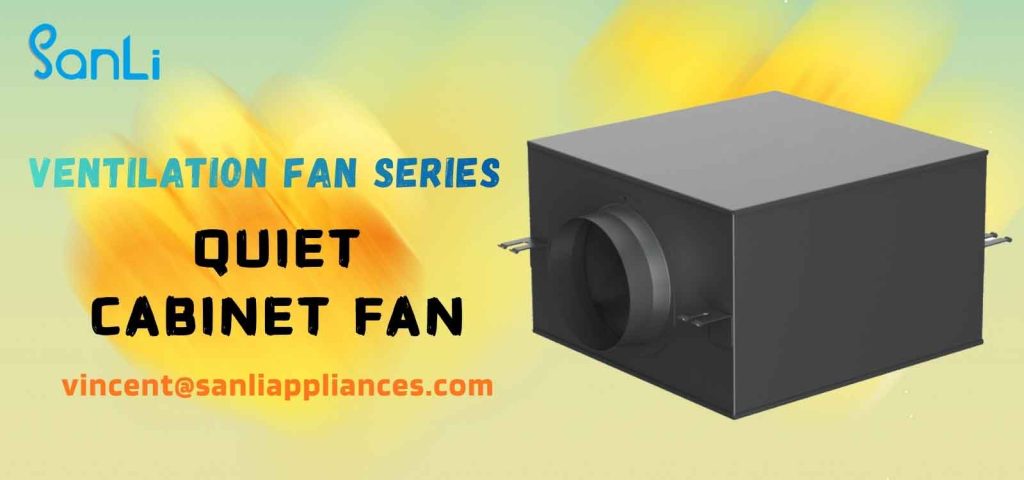
When you request custom ventilation fans technical drawings and specifications, it’s essential to pay attention to every detail that affects how the fan operates. Airflow direction, turbulence zones, and fan RPM are crucial for ensuring your system functions correctly. Many projects encounter challenges such as fitting fans into unique spaces, adhering to strict industry regulations, or managing difficult environmental conditions. By collaborating with a trusted manufacturer like SanLi Appliances, you can clearly communicate your needs and achieve the best results.
Key Takeaways
Figure out what your project needs before you talk to manufacturers. Knowing what you need helps you pick the right fan.
Think about where the fan will be used. Indoor fans and outdoor fans need different things because of space, weather, and air quality.
Make clear goals for airflow, pressure, and noise. This makes sure the fan works for your project.
Collect all the paperwork you need, like drawings and photos. Good paperwork helps manufacturers know what you want.
Pick a manufacturer that is trustworthy and has experience and certifications. This makes sure you get good quality and follow the rules.
Talk clearly using different ways, like email or phone. Regular updates help your project stay on track and fix problems fast.
Look at technical drawings closely before you say yes. This step stops mistakes and makes sure the fan matches what you need.
Keep talking to the manufacturer after you order. Support helps fix any problems that come up.
Identify Project and Fan Needs
Before you ask for custom ventilation fans, you should know what your project needs. This helps you talk to manufacturers and get the right fan for your job.
Define Application and Environment
Indoor or Outdoor Use
First, decide if your fan will be inside or outside. Indoor fans might need to fit in small spaces or look nice with the building. Outdoor fans must handle weather, hot or cold temperatures, and sunlight. Knowing where the fan goes helps you pick the best materials and protection.
Air Quality and Operating Conditions
Think about the air and the place where the fan will work. Some places have dust, water, chemicals, or get very hot. For example, fans in chemical plants need special coatings and must be explosion-proof. In clean rooms, you need fans that keep things clean and may use HEPA filters.
Tip: Always make sure the fan’s design matches the place it will be used for safety and long life.
Here is a table that shows how different places change what fans need:
| Application Environment | Specific Requirements |
|---|---|
| Combustion Chambers | High pressure, strong structure for safety |
| Chemical Processing | Resistant to chemicals, explosion-proof design |
| Clean Rooms | Cleanliness standards, HEPA filters, low contamination |
| Healthcare Facilities | Infection control, pressure control, air change rates |
| Manufacturing | Remove contaminants, process ventilation, comfort |
| Food Processing | Humidity control, temperature management, sanitation |
Set Performance Requirements
Airflow (CFM), Pressure, Noise
You need to set clear goals for your fan. Focus on airflow (CFM), pressure, and noise. These things affect how well the fan works and how comfortable the area is.
Here is a table of common industry rules:
| Standard/Code | Requirement Type | Details |
|---|---|---|
| Energy Code | Airflow | Use balancing devices to adjust airflow |
| Energy Code | Leakage Testing | Central systems must pass leakage tests (≤6% at set pressures) |
| ASHRAE Standard 62.2 | Performance Test | Test fans for airflow (ANSI/ASHRAE 51/AMCA 210) |
| ASHRAE Standard 62.2 | Sound Ratings | Fans must meet sound level limits at set airflow rates |
| HVI Standards | Certification | Equipment must be tested and rated for airflow and sound |
Setting these goals helps you follow rules and makes sure your fan works right.
Note Site and Installation Constraints
Space, Mounting, Integration
Look at the space where the fan will go. Measure the area and check for anything in the way. Some places need fans with special shapes or ways to mount them. You might need special pieces to connect the fan to ducts. Modular designs can help with shipping and putting the fan together, especially in small or hard-to-reach spots.
Custom fans may use different materials or parts to fit your space.
Design changes, like easy-open panels, can make fixing the fan easier.
Modular sections make it easier to put the fan together on-site.
Special connectors or pieces help the fan fit with other systems.
Planning well now stops problems later and keeps your project on time.
When you know all these needs, it is easier to ask for custom ventilation fans that fit your project and work well for a long time.
Prepare Request Documentation
When you get ready to Request Custom Ventilation Fans, you need clear paperwork. This helps you talk to manufacturers like SanLi Appliances. Good paperwork makes your project simple to understand. It also helps stop mistakes from happening.
Organize Project Details
Project Name, Location, Timeline
First, write your project name. This gives your request a clear label. Next, add where your project is. Manufacturers must know where the fan will be used. Also, include when you need the fan. This helps the manufacturer plan when to make it. Sharing these details early helps the manufacturer see your goals and timing.
Tip: If you involve key equipment manufacturers early, you can find problems sooner and focus on performance.
Gather Supporting Materials
Drawings, Photos, References
Collect drawings that show where the fan will go. Photos help the manufacturer see what the site looks like. References from other projects show what works well. These materials help the manufacturer know what you need. Clear documents make it easier to solve special problems in your facility.
Drawings show sizes and layout.
Photos give a real look at the site.
References help explain what you want.
You can use a table to keep your supporting materials organized:
| Material Type | Purpose | Example |
|---|---|---|
| Drawings | Show layout and space | Floor plan, CAD |
| Photos | Show real conditions | Site images |
| References | Show past solutions | Project reports |
List Contacts and Decision Makers
Write the names and contact details of everyone in the project. Add the commissioning agent early. This person connects design and testing needs. List the main people who make decisions. Manufacturers need to know who can answer questions and approve changes.
Project manager
Site engineer
Commissioning agent
Facility owner
Note: Clear contact details help the manufacturer reach the right people fast.
When you organize your project details, gather materials, and list contacts, your request is easy to understand. You help the manufacturer reply faster and more accurately. This step builds a good start for a smooth process when you Request Custom Ventilation Fans.
Request Custom Ventilation Fans from Manufacturer
If you want to Request Custom Ventilation Fans, you need to pick a supplier who knows what you need. The right manufacturer will listen and give you good solutions. Talking clearly helps you get the best results for your project.
Choose the Right Supplier
Experience, Capabilities, Certifications
You should always check if the manufacturer has enough experience before you Request Custom Ventilation Fans. A good supplier has made many fans before and has strong factories. They also have many types of fans. SanLi Appliances is a trusted company with over 20 years in the ventilation business. They offer OEM and ODM services, so you can get fans with your logo or special features.
Look for suppliers with important certifications. These show the manufacturer makes safe and high-quality fans. SanLi Appliances has certifications like ISO9001, CE, and ROHS. These help you follow local rules and lower risks in your project.
Here is a table to help you compare suppliers:
| Criteria | Description |
|---|---|
| Technical capability | Check if the supplier can meet your airflow, pressure, and noise needs. |
| Quality certifications | Look for ISO9001, CE, ROHS, and other required certificates. |
| Production infrastructure | Make sure the factory has modern equipment and skilled workers. |
| Customization options | See if you can choose materials, voltages, or add your logo. |
| Sample testing | Ask for samples to test before you order a large quantity. |
| Communication | Choose a supplier who answers questions quickly and clearly. |
| Delivery reliability | Pick a company with a good record for on-time delivery. |
| Energy-efficient motors | Ask about EC motors for better energy savings and lower costs. |
Tip: A manufacturer like SanLi Appliances gives you new energy-saving technology, control over production, and support for your project.
You should also check if the manufacturer knows about the certifications needed in your area. This helps you avoid delays and extra costs. Some common certifications are:
CE (Europe)
ROHS (Restriction of Hazardous Substances)
ERP (Energy-related Products)
UL (United States)
SASO (Saudi Arabia)
Communication Channels
Email, Online Forms, Meetings
Clear communication is very important when you Request Custom Ventilation Fans. You can use different ways to talk to the manufacturer. Each way has its own good points.
| Method | Best For | Tips |
|---|---|---|
| Formal documentation | Use clear subject lines and attach drawings or specs. | |
| Online Forms | Quick initial contact | Fill out all fields and upload supporting files if possible. |
| Video Calls | Design reviews | Share your screen and use bilingual notes for better understanding. |
| WhatsApp/SKYPE | Fast updates | Send voice messages for quick answers, especially with international teams. |
You should send technical drawings, material details, and any special needs in your first message. Regular meetings or calls help you check progress and fix problems fast.
Note: Using both English and the local language can help stop mistakes, especially for hard projects.
Structure Your Inquiry
When you send your first request, include all the important details. This helps the manufacturer know what you need and reply faster. Here is a table showing what to include:
| Item | Information to Provide | Why It Matters | Example |
|---|---|---|---|
| Project type | Type of building or industry | Different uses need different fan designs | Data center, hospital |
| Fan duty | Main use (supply, exhaust, etc.) | Affects structure and accessories | Exhaust fan |
| Required airflow | Airflow needed (CFM or m³/s) | Helps size the fan | 2,000 CFM |
| Required pressure | Pressure needed (Pa or inH₂O) | Ensures the fan can handle resistance | 500 Pa |
| Installation location | Where the fan will be installed | Impacts design and maintenance | Rooftop, wall |
| Duct data | Duct size and length | Affects pressure and fan selection | 400 mm, 20 m |
| Air condition | Clean, dusty, humid, etc. | Impacts materials and maintenance | Humid air |
| Explosion-proof need | Yes or no | Important for safety in hazardous areas | Yes |
| Power supply | Voltage and frequency | Ensures compatibility | 220V/50Hz |
| Control method | Manual, VFD, remote | Affects operation and cost | VFD control |
| Accessories | Silencer, filter, etc. | Can change price and performance | Silencer |
| Shipping info | Destination and packing needs | Important for logistics and cost | FOB Shanghai |
You should also list the main contacts for your project. This makes it easy for the manufacturer to reach the right person for questions or approvals.
Tip: Always ask for sample testing before you make a big order. This helps you check quality and performance.
If you follow these steps, it is easier to Request Custom Ventilation Fans that fit your project. Working with a trusted manufacturer like SanLi Appliances gives you expert help, flexible choices, and support from start to finish.
Specify Technical Drawings and Specifications
When you get ready to Request Custom Ventilation Fans, you need to give clear technical drawings and detailed specifications. This helps the manufacturer know what you want and build a fan that works well for your project.
Key Technical Parameters
Dimensions, Materials, Motor Specs
Start with the basic technical parameters. These details help the manufacturer design a fan that fits your space and meets your goals.
Dimensions: Give the exact size for the fan, like width, height, and depth. This makes sure the fan fits where you need it.
Materials: Pick materials such as aluminum or stainless steel for better strength. These materials do not rust and can handle high heat. If your fan will be in a hot place, ask for wiring and insulation that can handle high temperatures. This keeps the fan safe and working longer.
Motor Specifications: Tell the manufacturer the power, voltage, and speed you need. High-efficiency motors use less energy and cost less to run. For tough places, use motors that can handle heat and moisture.
Checking material quality often helps your fan last longer, especially in places with lots of humidity or temperature changes.
Here is a table that shows important technical parameters you should include:
| Parameter | Requirement |
|---|---|
| Airflow | ≥ 350 CFM per ton of nominal cooling capacity |
| Fan Watt Draw | ≤ 0.58 Watts per CFM |
| Measurement Methods | Portable watt meter, analog/digital utility meter |
| Compliance Methods | Flow capture hood, flow grid, fan flow meter |
Safety Features, Certifications
Safety is very important for ventilation fans, especially in places like factories, chemical plants, or hospitals. You must list all safety features and certifications needed for your project.
Explosion-Proof Motors: Use these in places with flammable gases or dust. They stop sparks from causing fires.
Non-Sparking Blades: These blades, made from special materials, lower the risk of fire.
Grounding Cables: These cables safely remove static electricity.
Anti-Corrosive Materials: These materials protect the fan from harsh chemicals.
High CFM Ratings: These ratings keep air moving in tight or dirty spaces.
Always follow air quality rules like OSHA and NIOSH. These rules keep workers safe by controlling dust, fumes, and other hazards.
Here is a table showing where different safety features are needed:
| Industry | Common Use Cases |
|---|---|
| Oil & Gas | Tank farms, offshore rigs, pipelines |
| Mining | Underground ventilation, dust control |
| Chemical Plants | Solvent extraction, mixing areas |
| Food Processing | Grain silos, sugar packaging |
| Pharmaceuticals | Clean rooms, solvent recovery |
| Paint and Coatings | Spray booths, solvent rooms |
Customization Options
Controls, Accessories, Special Features
You can make your ventilation fan fit your project even better by picking the right controls, accessories, and special features.
Fan Size and Blade Design: Choose the size and blade shape that gives you the airflow you need. Special blades can make the fan quieter or stronger.
Variable Frequency Drives (VFDs): These let you change the fan speed. You can save energy and keep the right airflow all the time.
Controls: Pick manual switches, remote controls, or smart systems. This makes it easy to adjust the fan when you need to.
Accessories: Add silencers, filters, or dampers to improve air quality and lower noise.
Special Features: Ask for explosion-proof parts, weatherproof covers, or easy-clean designs if your project needs them.
Custom options help you solve special problems, like keeping air clean in a hospital or saving energy in a factory.
A good set of options can help you finish your project on time and within budget. You can keep the air safe, follow all rules, and make sure your fan works well for many years.
Review and Approve Drawings
When you request custom ventilation fans, you need to check the technical drawings before production starts. This step helps you stop mistakes and makes sure your fan fits your project.
Request and Receive Documents
Ask the manufacturer for technical drawings and specifications. These papers show the fan’s size, shape, materials, and how to install it. You can get them by email or online. Make sure you have all the files you need, like CAD drawings, wiring diagrams, and product datasheets.
Ask for drawings that match your site size.
Request datasheets with motor specs and materials.
Get guides for mounting and wiring.
Tip: Keep all documents in a project folder. This helps you find information later.
Check for Accuracy and Compliance
Dimensions, Details, Standards
Check each drawing to make sure it is correct. Compare the sizes in the drawing to your site measurements. Look for details like mounting holes, duct connections, and wiring. Make sure the fan fits your space and meets your needs.
You also need to check if the fan follows industry standards. Many ventilation systems must follow rules from groups like ASHRAE, HVI, or AHAM. These rules cover airflow, sound, and safety. Use a checklist to review each drawing.
Here is a table that shows what to check for different system types:
| System Type | Criteria |
|---|---|
| Kitchen Exhaust Systems | System rated by HVI or AHAM for airflow and sound. |
| Rated airflow and capture efficiency must meet standards. | |
| Sound rating must follow standards. | |
| Central Ventilation Systems | Duct leakage check by an ATT is needed. |
| Documents must show duct leakage check meets standards. | |
| All Ventilation Systems | Must follow ASHRAE Standard 62.2 Sections 6 and 7. |
Always check that the drawings follow your project’s codes and rules. This keeps your project safe and legal.
Request Revisions if Needed
If you see mistakes or missing details, ask the manufacturer to fix them. Write down what needs to change, like wrong sizes or missing safety features. Send your comments by email or mark them on the drawing.
List each problem with a short note.
Attach marked drawings or photos if you can.
Ask for a new version with corrections.
Quick feedback helps the manufacturer fix problems fast. This keeps your project moving forward.
You must check every new drawing until it fits your needs. When you approve the final version, you can move to the next step and confirm your order.
Finalize and Confirm Order
Approve Final Documents
You must check the final technical drawings and specifications. Look at every detail in the documents. Make sure the fan size, materials, and features fit your project. Review the wiring diagrams and installation guides. These papers show how the fan will fit and work in your space.
If you see mistakes, ask the manufacturer to fix them. You can write notes or mark the drawings. Do not skip this step. Careful checking helps you avoid problems during installation. When everything is correct, send your approval to the manufacturer. This tells them to start making your custom fan.
Tip: Save a copy of all approved documents. You may need them for future maintenance or upgrades.
Confirm Timeline and Next Steps
After you approve the documents, confirm the production timeline. Ask the manufacturer when they will start and finish making your fan. Check the shipping date and how long delivery will take. Write these dates in your project plan.
You should also ask about the next steps. Find out if you need to pay a deposit or sign more papers. Ask who will contact you when the fan is ready to ship. Clear steps help you keep your project on track.
Here is a simple table to help you organize the timeline:
| Step | Responsible Party | Date/Deadline |
|---|---|---|
| Document Approval | You | [Your Date] |
| Production Start | Manufacturer | [Start Date] |
| Quality Inspection | Manufacturer | [Inspection Date] |
| Shipping | Manufacturer | [Ship Date] |
| Delivery | You | [Delivery Date] |
Note: Always double-check the timeline with your team and the manufacturer. This helps you avoid delays.
Ongoing Support and Communication
Good support does not end after you place your order. Stay in touch with the manufacturer during and after production. Regular updates help you know the status of your fan.
You can expect these support services from a professional manufacturer:
System analysis for your site
Custom design solutions for special needs
Installation oversight to guide your team
Ongoing support for questions or issues
24/7 emergency assistance if problems happen
If you have questions, contact your manufacturer right away. Quick answers help you solve problems before they grow. Keep all emails and notes from your talks. These records help you track progress and fix any issues.
Good communication builds trust and helps your project succeed. You get the best results when you and your manufacturer work together.
You get the best results when you follow clear steps to request custom ventilation fans. Always give all the details and look at every drawing carefully. Some people make mistakes like forgetting ceiling height, not showing electrical plans, or missing safety rules. If you work with a trusted manufacturer like SanLi Appliances, you get expert help and good products. They help you pick the right size, save energy, and add custom features.
Check every detail twice and talk often with your team for a smooth project and safe setup.
FAQ
What information should I include in my custom fan request?
You need to give the project name and where it is. Tell the manufacturer how much air you need the fan to move. Say what pressure, size, and materials you want. If you need special features, list them too. Try to add drawings or photos if you can. This makes it easier for the manufacturer to know what you want.
How long does it take to receive technical drawings?
You will usually get technical drawings in 3 to 7 business days. Sometimes it takes longer if your project is hard.
Can I request changes to the drawings?
Yes, you can ask for changes to the drawings. Look at the drawings closely. Write down your ideas or mark the drawings. The manufacturer will make the changes for you.
What certifications do SanLi Appliances fans have?
SanLi Appliances fans have certifications like ISO9001, CE, ROHS, and UL. These show the fans are safe and good quality in many countries.
How do I communicate with SanLi Appliances?
You can talk to SanLi Appliances by email, online forms, or video calls. Pick the way that works best for you. Always save your messages.
What if my project has special installation needs?
Tell the manufacturer if you have space problems or a special site. They can make custom solutions, like special brackets or parts, to fit your project.
Can I get samples before placing a large order?
Yes, you can ask for samples. Testing samples lets you check quality and performance before you buy more fans.
