
. These rules change how you pick ventilation fans. The rules make you look for fans that save more energy. They also make you look for fans that are safer. You see more schools, offices, and hospitals care about good ventilation now.
People care more about indoor air quality, so you need better ventilation solutions.
Fixing up old buildings makes people want new fans that save energy. Trusted manufacturers help you follow these new rules and stay up to date.
Key Takeaways
Building codes and IAQ standards are getting tougher. They want better ventilation in buildings.
Pick fans that use less energy and are safe. This helps you follow the new rules.
Learn about your local codes. They can be very different in each area.
Find fans with certifications like UL and Energy Star. These show the fans are good and follow the rules.
Good filters, like HEPA filters, help make indoor air cleaner.
Smart controls in fans can change airflow when needed. This saves energy and makes rooms more comfortable.
Buy from . They have products that meet the newest standards.
Use local deals and rebates for energy-saving fans. This helps you spend less money at first.
Building Codes Impact on Ventilation Demand
Major Codes Overview
IBC and IMC
You need to know the International Building Code (IBC) and International Mechanical Code (IMC). These codes set the basic rules for how buildings must handle ventilation. The IBC covers safety and health in all types of buildings. The IMC focuses on how to move air in and out of spaces. Both codes require you to use mechanical ventilation in many situations. You must make sure that your meet these rules if you want to pass inspections and avoid fines.
ASHRAE 62.1 & 62.2
ASHRAE 62.1 and 62.2 are important standards for indoor air quality. ASHRAE 62.1 covers commercial buildings. ASHRAE 62.2 covers homes and apartments. These standards tell you how much fresh air you need in each room. For example:
ASHRAE 62.2 says you must have at least airflow for residential ventilation fans.
The Energy Star program follows ASHRAE 62.2. It asks for fans with at least 2.8 cfm per watt and a sound level no higher than 2.0 sones for small range hoods.
California’s Title 24 Building Code uses ASHRAE 62.2 as its guide for new homes and renovations.
You see that these standards push you to choose fans that are efficient, quiet, and reliable.
State and Local Variations
Not every place uses the same rules. Some states and cities add their own requirements. For example, California has Title 24, which is stricter than many other states. Local codes may ask for higher airflow or special features like humidity sensors. You must check the rules in your area before you buy or sell ventilation fans.
Recent Code Updates
2019 and 2022 Energy Standards
New energy standards came out in 2019 and 2022. These updates make you use better fans in both new and old buildings. :
| Requirement Type | Description |
|---|---|
| Mechanical Ventilation | Every home and building must have systems that bring in outside air. |
| Air Filtration | You need MERV 13 filters in many air systems to catch more dust and germs. |
| Local Exhaust | You must use exhaust fans in kitchens and bathrooms to remove bad air. |
| Compliance Triggers | Any change to your ventilation system means you must follow the new rules. |
These changes mean you need to pick fans that can handle higher airflow and better filtration. You also need to make sure your fans work with new filters and controls.
Minimum Airflow Requirements
. For example:
Spray booths need airflow between 50 and 175 feet per minute, depending on the tools you use.
You must keep solvent vapors below 25% of the lower explosive limit for safety.
In homes, you need at least 100 cfm for kitchen fans and 50 cfm for bathroom fans.
These numbers help you choose the right fan for each job. You cannot ignore these rules if you want to pass inspections.
Compliance Drivers
Certification and Labeling
You must look for fans with the right certifications and labels. These show that the fans meet all the rules. Here are some key points:
| Factor | Description |
|---|---|
| Manufacturing Costs | Testing and paperwork for certifications can raise costs. |
| Compliance Processes | Factory audits and extra checks are needed for many markets. |
| Market Access | Each country or region may ask for different certifications. |
For example, . The UK uses UKCA. The U.S. looks for UL and Energy Star. SanLi Appliances has earned many of these certifications, including ISO9001, CE, UL, and more. This helps you trust that SanLi fans will pass inspections in many countries.
Enforcement and Inspections
Inspectors check your building to make sure you follow all the Building Codes. They look at your ventilation fans, labels, and paperwork. If you do not meet the rules, you may face delays or fines. You need to work with manufacturers who understand these rules and can give you the right documents. SanLi Appliances uses a strict quality inspection system. This means you get fans that meet the latest codes and pass inspections the first time.
Tip: Always ask for certification documents and test reports before you buy ventilation fans. This saves you time and trouble during inspections.
You see that Building Codes and standards keep changing. You must stay alert and work with trusted partners like SanLi Appliances to keep up with new rules and market needs.
IAQ Standards and Market Response
Key IAQ Standards
EPA Indoor AirPlus
The EPA Indoor AirPlus program has strict rules for air quality in homes. This program builds on ENERGY STAR. It asks for better ventilation, moisture control, and advanced filtration. You need to use fans that bring in enough fresh air. These fans must also work with high-efficiency filters. Many builders pick fans that meet these rules. This helps homeowners avoid health problems from mold, dust, and chemicals.
WELL and LEED
WELL and LEED are green building standards. They focus on health and saving energy. You should know how these standards change which fans you pick. WELL sets rules for air quality, comfort, and how much air moves. LEED gives points to buildings that use energy-saving fans and have better indoor air. Both standards use ASHRAE 62 as a base. But they often ask for more airflow and better controls.
Here is a table that shows how these standards shape product requirements:
| Aspect | Details |
|---|---|
| Minimum Ventilation Rates | Set by ASHRAE Standard 62, considering building size, use, and occupancy. |
| Ventilation Rate Example | For a 200 sq ft office per person, at least 17 CFM of outdoor air is required per person. |
| Enhanced Systems | Suggest higher ventilation rates to improve air quality and lower CO2 levels. |
| Demand Control Ventilation | Required to save energy when occupancy is lower than expected, adjusting ventilation accordingly. |
WELL and LEED push you to use smarter fans. These fans can change how much air they move when needed.
OSHA Regulations
OSHA makes rules to keep workers safe from bad air at work. You need fans that remove dust, fumes, and chemicals. OSHA rules often say you must use local exhaust fans in kitchens, factories, and labs. You must check that your fans meet OSHA airflow and safety rules. This helps you avoid fines and keeps workers safe.
Note: Many buyers now want fans with certifications and clear labels. This helps you show that your fans meet EPA, WELL, LEED, and OSHA rules.
IAQ and Health Trends
Post-Pandemic Awareness
After the pandemic, more people care about . Homeowners, schools, and businesses want clean air to lower sickness. Builders now focus on spaces with good ventilation to attract buyers and renters. This trend makes more people want fans that meet IAQ rules. These fans can filter out germs, dust, and allergens.
Demand Controlled Ventilation (DCV)
Demand controlled ventilation, or DCV, is now common in new fans. DCV systems use sensors to see how many people are in a room. The fans then change airflow as needed. This saves energy when rooms are empty. It also gives better air when rooms are full. You need fans that work with DCV to meet WELL, LEED, and EPA rules. DCV helps you save money and makes rooms more comfortable.
Key benefits of DCV:
Changes airflow based on how many people are there.
Saves energy and lowers bills.
Makes air better by reacting to real-time needs.
Product Innovation for IAQ
Advanced Filtration
More fans now have advanced filtration options. catch fine dust and allergens. Some fans use MERV 13 or better filters to catch even smaller things. UV-C light filters can kill germs and mold in the air. These features help you meet stricter IAQ rules and keep indoor spaces healthier.
Types of advanced filtration:
HEPA filters for small particles.
MERV 13+ filters for dust and pollen.
UV-C light for killing germs.
SanLi Appliances spends money on research to make fans with these filters. You can pick products that fit your project, from homes to hospitals.
Smart Controls
Smart controls are changing how you manage indoor air. Many new fans use sensors to check air quality, humidity, and how many people are there. These fans can turn on or off by themselves. They can change speed and send alerts to your phone. bring in fresh air and save energy. You get better air and use less energy at the same time.
Smart control features you should look for:
Checks air quality in real time.
Turns on or off and changes speed automatically.
Works with building management systems.
SanLi Appliances leads in smart ventilation technology. The company makes fans with built-in sensors, smart controls, and motors that save energy. You can trust SanLi to help you meet the latest IAQ rules and make healthier spaces.
Tip: Pick fans with advanced filters and smart controls. This helps you keep up with new Building Codes and IAQ rules.
Table: Key IAQ Factors Shaping Ventilation Fan Requirements
| Key Factors | Description |
|---|---|
| EU-harmonized compliance requirements | Compliance with EU-wide harmonization affects technical specifications and procurement practices, favoring fans that meet defined performance and safety criteria. |
| Energy-efficiency and environmental expectations | Sustainability focus drives demand for lower energy consumption and optimized power use in ventilation systems. |
| Certification-first safety culture | Buyers prioritize certification and traceability, influencing market dynamics towards manufacturers with robust quality systems. |
| Integrated supply chains across borders | Cross-border trade encourages standardization and compatibility in installation practices. |
| Regulated but advanced innovation environment | Innovation is compliance-aware, affecting the adoption of various ventilation technologies. |
| Public policy influence on building upgrades | Institutional frameworks guide demand for performance validation in building modernization. |
You see that IAQ rules and health trends now shape the whole . Companies like SanLi Appliances answer with new designs, better filters, and smart controls. You can meet the newest rules and give your customers safer, healthier spaces.
Market Growth Drivers
New Construction vs. Retrofit
Residential and Commercial Segments
There are two main project types for ventilation fans. New construction lets you plan the whole system from the start. You can pick the best fans and controls for new buildings. This makes it easy to follow the newest codes and energy rules. Retrofit projects are different. Old buildings often have bad ventilation and old wiring. You need fans that make air better but do not use too much power. The fans should also be simple to add. These differences change what fans you need for each job.
Regional Demand Differences
Where you live changes what fans people want.
In North America, strict air quality rules and smart buyers grow the market. The market could go from .
In Asia Pacific, more cities and higher incomes mean more fans are needed. The market may reach $5.4 billion by 2033, up from $3.6 billion in 2025.
In Europe, green building rules help the market grow. The market could move from $2.6 billion in 2025 to $3.6 billion by 2033. You must know the local rules and what buyers want in each place.
The World Health Organization says bad indoor air causes about each year. This shows why good ventilation is very important.
Energy Efficiency Trends
High-Efficiency Motors
More people want fans with high-efficiency motors now. These motors use less energy and cost less to run. They help you meet green building rules like LEED and WELL. Many governments give rewards for using energy-saving fans. High-efficiency motors make your projects better and save you money over time.
Green Building Initiatives
Green building programs want you to use fans that save energy and help the planet. Certifications like LEED, BREEAM, and WELL give points for using smart fans. These programs like smart controls, motors with different speeds, and new materials. You can see the effects in the table below:
| Trend or Technology | Key Insights |
|---|---|
| Smart ventilation systems | 46% growth chance with IoT and automation |
| Variable speed motors and designs | Use less energy and cost less to run |
| Energy-efficient fan adoption | 33% more use, cutting home electricity by 27% |
| Smart ventilation integration | Makes airflow better by 31% in cities |
The International Energy Agency says energy-saving tech can cut building energy use by up to 30%. This makes more people pick efficient fans for their homes and buildings.
Consumer Education and Compliance
Role of Wholesalers and Distributors
Wholesalers and distributors help you . They show you which fans meet the newest rules. They also teach you how to install and take care of the fans. This help makes it easier to follow the rules and pick the best fans for your needs.
Incentives and Rebates
Many places give rewards or rebates for using energy-saving fans. These rewards make the fans cost less at first. They also make you want to pick better fans. Always check for these programs in your area. They help you save money and follow new rules at the same time.
Tip: Keep up with local rewards and work with good distributors. This helps you save money and follow new rules as they change.
Manufacturer Response and Opportunities
Product Portfolio Expansion
Centrifugal and Axial Fans
Top centrifugal and axial fans. These fans help with different airflow needs in homes, offices, and factories. SanLi Appliances makes both types to fit many building codes and IAQ standards. You can pick fans that save energy, make little noise, and move air well. This helps you fix problems in new buildings and old ones.
Inline Duct and Exhaust Fans
Inline duct fans and exhaust fans are getting more popular. You use these fans to move air through long ducts or get rid of bad air in kitchens and bathrooms. SanLi’s inline fans work well in small spaces and support advanced filtration. You can choose models with smart controls and sensors. This makes it easier to follow new energy and air quality rules.
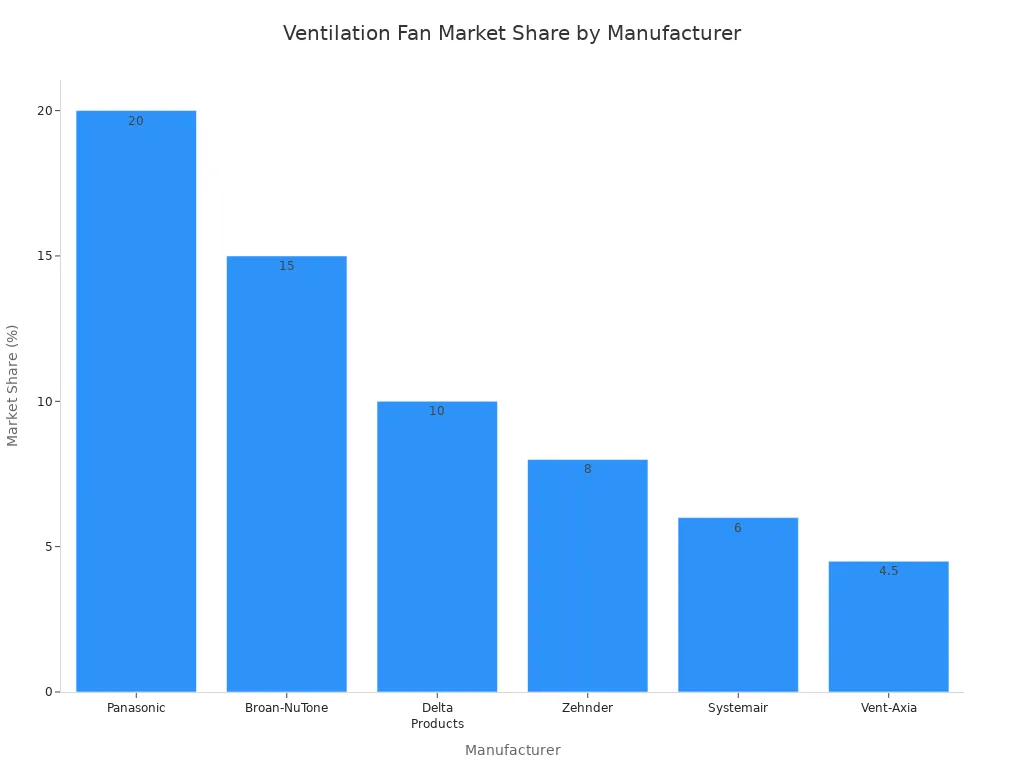
Here is how top manufacturers add more products to meet new demand:
| Manufacturer | Market Share | Key Strategies |
|---|---|---|
| Panasonic | ~20% | Focus on energy-efficient solutions and smart technology integration. |
| Broan-NuTone | ~15% | Introduction of connected home products to enhance market position. |
| Delta Products | ~10% | Commitment to sustainability and product innovation to meet regulatory standards. |
| Zehnder | ~8% | Targeting premium segments and architectural collaborations for revenue growth. |
| Systemair | ~6% | Diversified product range and recent acquisition to strengthen distribution capabilities. |
| Vent-Axia | 4-5% | Development of low-noise and eco-friendly products for urban markets. |
| Emerging Disruptors | N/A | Offering low-cost, high-efficiency solutions to meet consumer demand for budget-friendly options. |
Quality and Certification
ISO, CE, UL, and Other Certifications
You need the right certifications to sell fans in different countries. SanLi Appliances has ISO9001, CE, UL, and other global certifications. These marks show the fans are safe, save energy, and follow environmental rules. For example, you need UL 507 for the U.S., CE for Europe, and NOM for Mexico. This table shows some important certifications by region:
| Region | Certification Details |
|---|---|
| Mexico | NOM (Norma Oficial Mexicana) certification for safety compliance. |
| Thailand | TISI certification for electrical and electronic equipment, ensuring safety, EMC, and energy efficiency. |
| Global | IECEx certification for safety in hazardous or explosive atmospheres. |
| United States | Compliance with DOE energy conservation standards and UL 507 for electrical safety. |
| European Union | CE marking for health, safety, and environmental protection; ATEX certification for explosive atmospheres. |
Critical to Quality Inspection
You want fans that last and work well. SanLi uses a strict system. This system checks how strong, quiet, and energy-saving the fans are. Every fan gets tested before leaving the factory. Here is what a good inspection process checks:
| Aspect | Description |
|---|---|
| Durability | Ensures that the fans can withstand operational stresses over time. |
| Performance | Verifies that the fans operate effectively under specified conditions. |
| Energy Efficiency | Confirms that the fans consume an optimal amount of energy during operation. |
| Noise Level | Assesses the sound produced by the fans to meet acceptable limits. |
| Quality Management Systems | Procedures defined to ensure compliance at every production stage. |
| Testing and Approval | Essential procedures performed before products are deemed ready for use, ensuring reliability. |
Flexible Supply and OEM/ODM
Customization and Small-Batch Production
Sometimes you need special fans for unique projects. SanLi can make custom designs and small batches. You can order fans with special sizes, features, or your own brand. This helps you win more jobs and follow local rules.
Global Partnerships
You get flexible supply and strong partnerships. SanLi offers exclusive deals, project teamwork, and partner programs. You get help with bids, technical support, and early access to new products. This helps your business grow and keeps up with market changes.
Tip: Work with manufacturers who offer flexible supply, strong certifications, and custom solutions. This gives you an edge in a fast-changing market.
Future Outlook for Ventilation Fans
Regulatory Trends
Stricter IAQ and Energy Codes
In the next few years, rules will get stricter. Many countries want better air in homes, schools, and offices. Groups like OSHA and the Department of Energy in the U.S. are making new rules. These rules tell you to upgrade your ventilation systems. In Europe, new Ecodesign rules want fans that use less energy. Germany is leading with rules that save energy and lower noise.
Here is a table with some main rule changes:
| Evidence | Description |
|---|---|
| Evolving air quality standards | You must follow new rules for air, noise, vibration, and energy use. |
| Indoor air quality regulations | Agencies make you improve your ventilation systems. |
| Ecodesign regulations in Europe | Europe wants fans that save more energy and meet strict design rules. |
Note: Get ready for more inspections and higher standards for all buildings.
Global Harmonization
Countries are trying to make their rules more alike. This helps you use the same fans in many places. You will need fans with lots of certifications. More people will want fans with marks like CE, UL, and ISO. This makes it easier to sell and install fans around the world.
You must watch for rule changes in each area.
Fans that meet global rules will help you most.
Technology and Sustainability
IoT and Smart Ventilation
New technology is changing how you use fans. Smart fans have . These fans can connect to building management systems. You can control them from your phone or computer. Smart fans change airflow when more or fewer people are in a room. This saves energy and keeps air clean.
Here is a table with smart fan features:
| Feature | Description |
|---|---|
| Intelligent Sensors | Fans check airflow, temperature, and system health. |
| Centralized Control | You can change fan settings from far away. |
| Predictive Analytics | Fans warn you early about problems like shaking or getting too hot. |
| Operational Intelligence | You can watch fans in real time, which is common now. |
Tip: Smart fans save money and keep your building healthy.
Sustainable Materials
More fans are made from materials that are better for the planet. and does not get damaged by chemicals. This material also helps fans use less energy. Companies use bio-based materials and green ways to make fans. Energy-recovery systems are also used more now. These systems help you reach green building goals and get better ratings for your building.
People now care more about saving energy and being green.
You can pick fans that help you earn green certifications.
Choosing green fans is good for your business and the planet. 🌱
Building codes and IAQ standards now affect which fans people buy. You must pick fans that save energy and have the right certifications. It is smart to work with that make new and better fans.
Always look for new rules in your area
Sell fans that are smart and use less energy
Make good partnerships with your suppliers
Be ready. New rules and new technology will keep changing what fans you need. You can be a leader if you learn about changes and get ready for them.
FAQ
What is the main reason for higher demand for ventilation fans?
More people want ventilation fans now. This is because new building codes and IAQ standards need better ventilation. These rules help keep air clean and safe in homes, schools, and offices.
How do I know if a ventilation fan meets local codes?
You should look for certifications like UL, CE, or Energy Star. Always ask your supplier for test reports and labels. Certified fans help you pass inspections and avoid fines.
Why do IAQ standards matter for my building project?
IAQ standards help protect people’s health. They lower dust, germs, and chemicals inside buildings. You must follow these rules to make spaces safer and meet the law.
What types of ventilation fans does SanLi Appliances offer?
SanLi Appliances has many types of fans:
Centrifugal fans
Axial fans
Inline duct fans
Exhaust fans
You can pick the best fan for homes, offices, or factories.
Can I get custom ventilation solutions for special projects?
Yes! SanLi Appliances can make fans with special sizes or features. You can also get private labels. This helps you meet special project needs and local rules.
How do smart controls improve ventilation fans?
Smart controls help fans change speed and airflow by themselves. This saves energy and keeps air fresh. Some systems can send alerts to your phone or building system.
