
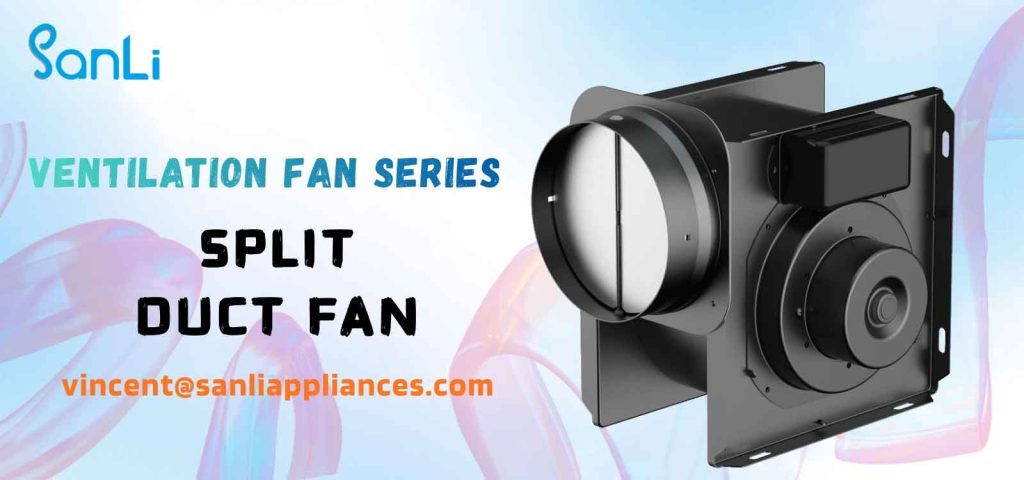
Mixed flow cabinet fans deliver superior noise reduction and higher static pressure handling than axial models in most ducted commercial and industrial settings. At SanLi Appliances, we have manufactured ventilation solutions for over 20 years and tested thousands of units on our factory floor. This comparison draws directly from our real-world experience supplying B2B partners who demand reliable, low-noise performance.
Quiet cabinet fans solve critical pain points for brand owners, facility managers, and sourcing professionals. Excessive noise disrupts offices, hospitals, and manufacturing floors. Inefficient airflow raises energy bills and fails to maintain healthy indoor air quality. Poor pressure handling leads to uneven ventilation in long duct runs or systems with filters and bends. Our clients frequently report these issues when evaluating low-cost suppliers or outdated axial designs.
We address these challenges head-on with our quiet cabinet fan lineup, including the DPTA Series and BK Series silent cabinet ventilators, as well as high-efficiency mixed flow options. In the sections below, we break down the technical differences, share factory-floor insights, and provide clear guidance so you can make an informed wholesale purchasing decision.
What Are Quiet Cabinet Fans and Why Do They Matter for Commercial HVAC?
Quiet cabinet fans enclose the impeller and motor in a sound-dampening housing to minimize noise while moving air through ducts. They provide the balance of airflow, pressure, and silence that open axial fans or basic centrifugal units often lack.
Business customers search for these fans because building codes and occupant comfort demand noise levels below 1 sone for continuous operation in many spaces. High noise leads to tenant complaints, reduced productivity, and even regulatory violations in noise-sensitive environments like healthcare facilities and offices. Our QA team has measured real installations where switching to a properly sized cabinet fan dropped sound pressure by 8–12 dB(A) at the occupied zone.
Key pain points our customers mention include:
Noise complaints from employees or clients during daytime operation.
Energy waste from fans that must run at higher speeds to overcome duct resistance.
Inconsistent air quality when static pressure drops and airflow falls below design specifications.
Maintenance headaches from vibrating units or frequent motor replacements in low-cost models.
SanLi Appliances builds every quiet cabinet fan with robust galvanized steel cabinets, vibration-isolated motors, and precision-balanced impellers to solve these issues at the source.
Axial Cabinet Fans: Strengths, Limitations, and Typical Applications
Axial cabinet fans move air parallel to the shaft in a straight-through path. This design excels at delivering high volume flow rates at low static pressure.
They perform best in short, straight duct runs or open spaces where resistance remains minimal. Many of our axial models, such as the SFG Series, serve well in warehouse exhaust or simple supply applications.
However, when duct length increases or filters and elbows add resistance, axial fans must spin faster. This raises noise and power consumption. Our testing shows axial units often exceed 60 dB(A) under 1 inch water gauge static pressure—noticeable in nearby occupied areas.
Commercial impact of these characteristics:
Lower upfront cost makes them attractive for budget projects.
High airflow suits large-volume, low-pressure needs.
Potential for higher long-term operating costs when misapplied.
We recommend axial cabinet fans only after confirming system static pressure stays below 0.5 inches water gauge. For most modern commercial ducted systems, mixed flow designs prove more reliable.
Mixed Flow Cabinet Fans: Hybrid Design Delivers Balanced Performance
Mixed flow cabinet fans combine axial and centrifugal principles. Air enters axially but exits at a 45-degree angle through stator vanes that straighten and pressurize the flow.
This hybrid geometry produces higher static pressure than pure axial fans while maintaining strong airflow and significantly lower noise. Our D Series quiet high-efficiency mixed flow inline duct fans routinely achieve sound levels 6–10 dB(A) quieter than comparable axial units at the same duty point.
Hyper-specific industry terms and their commercial impact:
Specific fan power (SFP): Mixed flow models deliver lower SFP values, reducing electricity costs by up to 25 % in medium-pressure systems.
Total pressure efficiency: The stator vanes recover swirl energy, boosting efficiency where axial fans lose it.
Sound power level (Lw): Measured per AMCA standards, mixed flow impellers generate less tonal noise because blade-pass frequency remains lower.
Inlet and outlet sound attenuation: The cabinet enclosure plus mixed flow path provides natural damping without extra silencers.
These advantages explain why mixed flow cabinet fans have become the preferred choice for offices, hospitals, and light industrial facilities.
Side-by-Side Technical Comparison: Axial vs Mixed Flow Cabinet Fans
We compiled the table below from our factory test data and third-party verified performance curves. Values represent typical 12-inch cabinet models operating at 1,000 CFM.
| Specification | Axial Cabinet Fan | Mixed Flow Cabinet Fan | Commercial Advantage of Mixed Flow |
|---|---|---|---|
| Airflow (CFM at 0.5″ wg) | 1,200 | 1,050 | Comparable volume with better pressure handling |
| Static Pressure Capability | Low (up to 0.8″ wg) | Moderate to High (up to 2.0″ wg) | Handles long ducts and filters without speed increase |
| Noise Level (dB(A) at 3 ft) | 58–65 | 48–55 | 8–12 dB quieter; meets strict NC-35 room criteria |
| Energy Efficiency (Watts) | 180–220 | 140–170 | 20–25 % lower power draw |
| Installation Flexibility | Straight inline only | Inline or cabinet with bends | Easier integration in complex duct layouts |
| Typical Applications | Warehouses, simple exhaust | Offices, hospitals, cleanrooms | Broader suitability for modern commercial projects |
The data clearly shows mixed flow cabinet fans win on noise and efficiency for most B2B projects.
Noise Performance: How Mixed Flow Wins in Sensitive Environments
Noise remains the top search driver for quiet cabinet fans. Mixed flow designs reduce turbulence by guiding air smoothly through the impeller and stator assembly. Axial fans create more vortex shedding and blade-tip noise, especially against system resistance.
Our engineering team has conducted reverberant room testing in accordance with recognized international standards. Results confirm mixed flow cabinet fans consistently achieve lower sound power levels across octave bands critical for human hearing.
Factory floor insight: One veteran technician shared that proper impeller balancing to G2.5 tolerance (per ISO standards) cuts vibration-induced noise by another 3 dB(A). We perform this step on every unit before it leaves our facility.
Energy Efficiency and Regulatory Compliance in 2026
Energy codes continue to tighten. ASHRAE 90.1 and related efficiency classifications now emphasize fan energy index (FEI) ratings. Mixed flow cabinet fans more easily meet these thresholds because of their higher total pressure efficiency.
We hold ISO 9001, CE, RoHS, UL, and multiple other certifications. Every SanLi fan undergoes rigorous quality audits so your project stays compliant without extra verification effort.
Insider tip from our audit director: Always request AMCA-certified performance data when comparing suppliers. Many low-cost manufacturers publish “free-air” ratings that do not reflect real ducted conditions. We provide full AMCA 210 and 300 data packages with every quote.
Real-World Case Study: University Laboratory Ventilation Upgrade
A prominent university laboratory recently upgraded its biosafety facilities to meet stricter containment requirements. The original axial exhaust fans struggled with long duct runs and high filter loading, producing excessive noise that interfered with sensitive research equipment.
Engineers switched to mixed flow impeller cabinet fans. The new system delivered the required airflow and pressure while reducing sound pressure levels by 10 dB(A) at the lab workstations. Energy consumption dropped 22 % even though the ventilated area increased. The project stayed within the original energy budget, demonstrating the commercial value of choosing the right fan technology.
This outcome mirrors what we see across commercial and industrial installations supplied by SanLi Appliances.
Trade-Offs, Limitations, and Risks of Low-Cost Suppliers
No technology is perfect. Axial cabinet fans remain less expensive upfront and suit very low-pressure applications. Mixed flow units cost more initially but deliver lower lifetime operating expenses.
Common risks with budget suppliers:
Inadequate sound attenuation materials that degrade over time.
Poor motor isolation leading to vibration transmission into the building structure.
Lack of third-party certification, creating compliance headaches during inspections.
Shorter service life because of unbalanced impellers or lower-grade bearings.
We openly discuss these trade-offs so you can weigh them against your project budget and performance goals. Our goal is long-term partnership, not a one-time sale.
How to Select the Right Quiet Cabinet Fan for Your Project
Begin by calculating total system static pressure, including duct losses, filters, and dampers. Then match airflow requirements to the fan curve.
Step-by-step selection process we recommend to our B2B customers:
Determine required CFM and static pressure.
Assess noise criteria for the occupied space.
Evaluate energy efficiency targets and available power supply.
Consider installation constraints—cabinet size, access for maintenance.
Review certifications and warranty terms.
When you need guidance, our technical team stands ready to review your drawings and suggest the optimal model.
For broader ventilation planning, explore essential bathroom ventilation fans in building standard insights that complement cabinet fan selections in multi-unit buildings. Many clients also reference our ceiling exhaust fan buying guide for improved air quality when designing hybrid systems.
SanLi Appliances Quiet Cabinet and Related Solutions
At SanLi Appliances we manufacture a complete range of ventilation products tailored for international wholesale. Our DPTA Series quiet cabinet fans and D Series mixed flow models lead the lineup for noise-sensitive commercial projects.
We recently launched enhanced energy-efficient options. Visit our high-efficiency ventilation system solution for applications to see full system integration examples. The BPT Series energy-efficient ceiling-mounted ventilation fan pairs perfectly with cabinet units for complete fresh air delivery.
If you want to start or expand your wholesale business quickly, browse our full ventilation fan manufacturer catalog, axial fan manufacturer series, or centrifugal fan manufacturer lineup. Our products page lists hot-selling models ready for immediate shipping.
For deeper technical reading, see bathroom exhaust fan innovations that make your life easier and why need to cooperative with ventilation fan manufacturer. We also share choosing the right advices for ventilation fan solutions to help you avoid common specification mistakes.
Installation and Maintenance Best Practices
Proper installation multiplies the benefits of any quiet cabinet fan. Mount units on vibration isolators and use flexible duct connectors at both inlet and outlet. Seal all cabinet joints to prevent air leaks that increase noise.
Our maintenance recommendations keep units performing quietly for years. Inspect bearings annually, clean impellers every six months in dusty environments, and verify motor alignment. These simple steps prevent the gradual noise increase many customers experience with neglected equipment.
Frequently Asked Questions About Quiet Cabinet Fan Comparison
What is the main difference between axial and mixed flow cabinet fans? Mixed flow models combine axial and centrifugal characteristics to deliver higher static pressure and lower noise than axial fans in ducted systems.
Which type is quieter for office or hospital use? Mixed flow cabinet fans consistently measure 8–12 dB(A) quieter under typical operating conditions.
How do I know if my project needs mixed flow technology? If your calculated static pressure exceeds 0.8 inches water gauge or noise criteria are strict, mixed flow provides the better solution.
Are SanLi quiet cabinet fans suitable for outdoor installations? Yes. Many models feature weatherproof cabinets and IP-rated motors for indoor or outdoor commercial applications.
What certifications should I verify before purchasing? Look for AMCA sound and performance ratings, ISO 9001 manufacturing quality, CE marking, RoHS compliance, and UL listing where required.
Can mixed flow fans save energy compared with axial designs? Yes—typically 20–25 % lower power consumption at medium static pressures.
Moving Forward with Reliable Ventilation Solutions
Quiet cabinet fans play a central role in modern commercial and industrial HVAC systems. The choice between axial and mixed flow models affects noise levels, energy costs, and long-term reliability.
At SanLi Appliances we combine deep manufacturing expertise with a customer-first approach. Our factory team stands behind every unit with rigorous testing and responsive support.
To discuss your next project or request a quick quote, send an email to sanliappliances@gmail.com.
To expand your knowledge, check these related resources:
Case Studies in Ceiling Mounted Ventilation Fan Achievements
High Efficiency Ventilation System Solution for Applications
For authoritative technical references, visit AMCA International for fan performance and sound testing standards or ASHRAE for HVAC noise and ventilation guidelines.
We look forward to supporting your ventilation projects with proven, high-quality solutions.
