
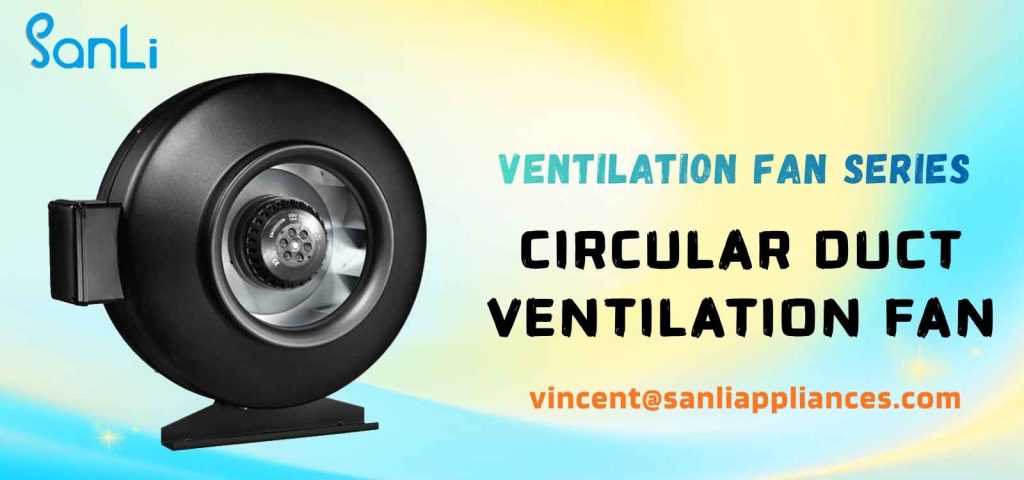
When you pick ventilation fans manufacturers, you want safe and strong products. Manufacturers do many tests to make sure of good quality and performance. For example, SanLi Appliances checks everything with visual inspection, gravimetric analysis, electrical testing, and functional performance testing. These steps help find dust, measure parts, check electrical safety, and make sure each fan works right. SanLi Appliances is a leader because they follow strict rules and always try new ideas.
| Testing Method | Purpose |
|---|---|
| Visual Inspection | Finds where dust can get in by using pictures. |
| Gravimetric Analysis | Measures how much dust is inside by weighing parts. |
| Electrical Testing | Checks insulation and contact resistance for safety. |
| Functional Performance Testing | Tests how the fan works to find problems. |
Key Takeaways
Pick manufacturers that care about safety and quality in their ventilation fans.
Find companies that do careful testing, like looking at the fans and checking how they work.
Make sure the fans have important certifications such as ISO, CE, and UL. This helps you know the fans are reliable.
Learn why airflow measurements (CFM) matter for good ventilation in your room.
Choose manufacturers that spend time and money on making energy-saving fan designs.
Look for companies that can make special fans just for your needs.
Trust manufacturers who keep records of their testing to make sure the fans are good quality.
Give feedback to manufacturers so they can make better products and improve your experience.
Ventilation Fans Manufacturers: Industry Positioning and Quality Commitment
Manufacturing Expertise and R&D
If you want the best ventilation fans, look for skilled companies. SanLi Appliances is special because they spend money on research and development. This helps them make better fans that save energy. Their smart fans use less power and work in many places. Research and development also help SanLi follow new rules and meet customer needs. Because of this, their fans are safer, quieter, and work better.
Quality Systems and Certifications
Always check if a company uses strong quality systems. The best companies use new technology and careful checks. They make sure every fan is safe and works well. You can see their hard work in the certifications they have. Here is a table with some common certifications you might see:
| Certification Type | Description |
|---|---|
| ISO9001 | Quality Management System |
| ISO14001 | Environmental Management System |
| ISO27001 | Information Security Management System |
| CE | European Conformity |
| UL | Underwriters Laboratories Safety Certification |
| ETL | Electrical Testing Laboratories Certification |
| ROHS | Restriction of Hazardous Substances |
| CB | Certification Body for International Standards |
| SASO | Saudi Standards, Metrology and Quality Org. |
| GCC | Gulf Cooperation Council Certification |
| EMC | Electromagnetic Compatibility |
| LVD | Low Voltage Directive |
| CCC | China Compulsory Certification |
You can trust these certifications. They mean the fans passed many tests. Companies also give you product data sheets and test results. This lets you know about airflow, energy use, and safety.
Global Partnerships and Market Reach
You get more choices when companies work with partners worldwide. These partnerships help companies sell in more places and learn new things. SanLi Appliances works with big brands and uses their ideas to make better fans.
Working with other countries helps companies sell in special markets and use good delivery systems. It also lets them use new technology and learn from experts, which makes them stronger in the market.
SanLi has many products, like industrial fans and home fans. You can use their fans in homes, offices, factories, and hospitals. Their flexible way of working helps you find the right fan for any place.
Product Testing Process Overview
Testing Workflow Steps
You should know how companies check each ventilation fan. The testing process has clear steps. These steps make sure every fan is safe and works well. Here is a table that shows the main steps:
| Stage | Description |
|---|---|
| Balance test | Makes sure fan blades are stable. It finds and fixes imbalance to stop vibration and noise. |
| Electrical performance test | Checks things like current, voltage, and air volume. This makes sure the fan works right. |
| Mechanical performance test | Finds problems by testing vibration and noise. It checks if the fan meets rules for how it should work. |
| Aging test | Tests how long the fan lasts. It checks performance in tough conditions over time. |
| Appearance test | Looks at size and surface quality. This makes sure the fan looks good and fits right. |
These steps happen in every modern fan factory. Each step checks a different part of the fan’s quality. The balance test helps the fan move air quietly. The electrical performance test checks if the fan uses power safely and moves enough air. The mechanical performance test looks for vibration or noise problems. The aging test shows if the fan will last a long time. The appearance test checks if the fan looks nice and fits well.
Manufacturers use special tools like an amca accredited air test chamber. This chamber measures airflow and air volume. It gives real numbers about how much air the fan can move. You can trust these numbers because the chamber follows strict rules. The amca accredited air test chamber helps you know the fan will work well.
Manufacturers also use traceability to track every fan. You get better quality when each fan has a record. Here is how traceability works:
Barcode checking and test data records help find any problem.
The system keeps records of all tests, so you know when and where each fan passed.
This process means you can trust the ventilation system. It will give you safe and reliable air every time.
Standards and Compliance
You want your ventilation fans to meet high standards. Manufacturers follow strict rules to make sure each fan is safe and works well. These rules come from groups that set standards for airflow, safety, and performance.
Here is a table with some important standards for ventilation fans:
| Standard | Region |
|---|---|
| ATEX | Europe |
| IECEx | International |
| NEC 500/505 | North America |
Manufacturers like SanLi Appliances also follow ISO, CE, and UL certifications. These certifications show the fans passed many tests for safety, energy use, and air quality. You can find these marks on the product or in the manual.
When you see these standards and certifications, you know the fan will work well. You feel good because the fan meets rules for airflow, electrical safety, and lasting performance. Always check for these marks when you pick a ventilation fan.
Balance and Mechanical Testing
Balance Testing Methods
When you look at industrial exhaust fans, you want them to work well. Balance testing checks if the fan blades spin without shaking. Manufacturers use two kinds of tests for this. Static balance checks if the fan stays still when it is not spinning. Dynamic balance checks the fan while it is spinning.
Static and Dynamic Balance
Modern factories use two-plane dynamic balancing. This method uses special tools to check vibration. Amplitude reader ports show how much the fan shakes. A tachometer tells where the fan is not balanced. Technicians run the fan to find spots that need fixing. They move the blades or add weights to make the fan balanced. This keeps industrial exhaust fans safe and quiet. The fan moves air without extra noise or damage.
Tip: Balanced fans last longer and break less. You save money and do not have to stop work as much.
Mechanical Performance Checks
Mechanical performance checks show if your industrial exhaust fans work right. You compare real numbers to what the design says. These checks look at flow rate, static pressure, power use, and fan speed.
Vibration and Noise Analysis
You want your ventilation system to work well. Vibration and noise analysis shows if the fan runs smoothly. Here is what you check:
You measure flow rate and static pressure to see if the fan moves enough air.
You check power use to find energy problems.
You compare fan speed to what the design says to find problems early.
You listen for noise and feel for vibration. Too much means something is wrong.
Mechanical performance checks help you avoid mistakes. Fixed vibration limits can sometimes be wrong. Good checks tell you if the fan needs fixing or if it is fine. Reliable industrial exhaust fans are important for safety and work. You keep your ventilation system working and protect your workers.
Note: Good mechanical checks help you plan repairs and keep your system strong. You get steady airflow and safe places in every area.
| Mechanical Check | What It Shows | Why It Matters |
|---|---|---|
| Flow Rate | Air movement | Proper ventilation |
| Static Pressure | Air resistance | System efficiency |
| Power Consumption | Energy use | Cost and performance |
| Fan Speed | Rotation speed | Early problem detection |
| Vibration/Noise | Smooth operation | Safety and comfort |
You can see how balance and mechanical testing help your industrial exhaust fans work well. You get better air movement and safer places to work.
Electrical and CFM Performance Testing
Electrical Safety and Efficiency
You need your ventilation fans to be safe every day. Electrical safety tests help find problems before they get worse. These tests check the wires, insulation, and motor parts. You can find common problems during these tests.
Short circuits happen when wires touch or insulation breaks. These can start fires.
Grounded faults happen when electricity goes the wrong way. This makes the motor work less well.
Overheating happens if there is not enough air or the fan works too hard. This can break the motor.
You want your fans to stay away from these problems. Electrical safety tests keep your building safe and your fans working.
You also want your fans to use less energy. Energy efficiency means fans use less power but still move air. You save money and help the planet. Ventilation validation checks how much air moves and if it meets building rules. You get system checks, airflow tests, and performance checks. These steps make sure your fans work well and meet their goals.
Tip: Efficient fans help you pay less for energy and last longer.
CFM Measurement and Airflow Testing
You need to know how much air your fan moves. CFM means cubic feet per minute. This number shows how fast and far air moves in your room. You want the right CFM for each space. If airflow is too low, the air feels old. If it is too high, you waste energy.
Testing labs use special tools to measure CFM. Here are some of the tools in the table below.
| Equipment Name | Description | Accuracy | Features |
|---|---|---|---|
| FAN-E Pitot Airflow Measurement Traverse Station | Has many sensors for pressure; measures fan or duct airflow. | ±2% | Has a honeycomb cell; certified by AMCA Standard 610. |
| VELTRON III Transmitter | Dual-channel transmitter for HVAC airflow. | N/A | Works with many probes; flexible design. |
| VOLU-probe Pitot Airflow Measurement Traverse Probe | Insertion style probes that cost less. | N/A | AMCA certified; strong and easy to use. |
| Aluminum LO-flo Pitot Airflow Measurement Traverse Station | Uses honeycomb air straightener and Pitot technology. | ±2% | Measures small air volumes in small ducts. |
These tools give you correct airflow numbers. You can trust the results because the tools follow strict rules. Real-world testing uses these numbers to see if your fans work as promised. You learn that your ventilation is only as good as the data.
You want your fans to work their best and last long. Testing airflow helps you get the best mix of energy use and air movement. Your fans keep your rooms fresh and nice.
Note: Always look at CFM ratings and test results. You get better air and save energy with fans that have good test results.
Aging and Environmental Testing
Long-Term Reliability Tests
You want your ventilation fans to last a long time. Manufacturers use special tests to see how long fans work. These tests show how long parts like bearings and motors last. There are two important numbers you should know:
MTTF means the average time before a part stops working. For example, if 10 out of 100 motors break after 1,000,000 hours, the MTTF is 100,000 hours.
L10 Life tells you when 10% of the parts have broken. If a bearing has an L10 life of 50,000 hours, it means 90% will last longer.
If a gearbox has an MTTF L10 of 80,000 hours, 90% will last more than that.
You can trust these numbers because they come from real lab tests. These tests help you pick fans that will not break often. You get fans that last longer and cost less to fix.
Tip: Always look at the MTTF and L10 numbers when you buy industrial fans. These numbers help you plan repairs and stop sudden problems.
Environmental Stress and Durability
Industrial fans have to work in hard places every day. You need to know your fans will work even when the weather is bad. Manufacturers use special tests to see if fans can handle tough conditions.
Special labs make extreme weather to test the fans.
These tests use strong pressure and long times with heat, cold, wind, dust, and water.
A weather machine can copy storms, freezing cold, and wet air.
Engineers watch how parts change shape or rust. They also check if moving parts still work well.
You want your fans to pass these hard tests. If a fan works after these tests, it will work in your warehouse, kitchen, or factory. These tests keep your workers and machines safe by making sure the fans follow safety rules.
Note: Environmental tests help you stop expensive breaks. You feel better knowing your fans will work, even when the weather is bad.
Aging and environmental tests are important for safe and strong fans. These tests help your fans last longer and keep your air clean and safe.
Appearance and Final Inspection
Visual Quality Checks
You want your ventilation fans to look good and work well. Manufacturers use visual quality checks to make sure each fan meets high standards. These checks happen before the fan leaves the factory. Workers look at every part of the fan. They check for scratches, dents, and stains. You see clean surfaces and smooth edges. The fan must have the right color and finish.
You can spot problems early with visual checks. Workers use bright lights and magnifying glasses. They look at the fan from different angles. If they find a flaw, they fix it or replace the part. You get a fan that looks professional and fits your space.
Here are some things workers check during visual inspection:
Surface finish and paint quality
Correct logo and labels
No cracks or chips
Proper assembly and alignment
Clean and dust-free parts
Tip: Always check the fan’s appearance before installing it. A good-looking fan shows strong quality control.
You can see the results in a simple table:
| Inspection Item | What You Should See |
|---|---|
| Surface Finish | Smooth, even color |
| Logo and Labels | Clear, correct placement |
| Assembly | Tight, aligned parts |
| Cleanliness | No dust or stains |
| Damage | No cracks or dents |
Final Product Validation
You need to trust that your fan will work as promised. Final product validation gives you that confidence. Manufacturers run a series of tests on each finished fan. These tests check if the fan meets all safety and performance standards.
You see workers test the fan’s airflow and electrical safety. They measure noise levels and vibration. They check if the fan fits the product specifications. If the fan passes every test, it gets a quality stamp. If it fails, workers fix the problem or remove the fan from the batch.
Here is how final validation works:
Workers run the fan at full speed.
They measure airflow and noise.
They check electrical safety with special tools.
They compare test results to the product’s data sheet.
They record all results for traceability.
Note: Final validation protects you from hidden defects. You get a fan that works safely and reliably.
You benefit from these steps. You receive a fan that looks good, works well, and lasts longer. Manufacturers like SanLi Appliances use strict inspection and validation to deliver quality you can trust. 🛠️
Continuous Improvement and Customer Collaboration
Data Analysis and Quality Feedback
You play a big role in making ventilation fans better. When you share your thoughts, you help manufacturers like SanLi Appliances improve their products. Your feedback gives important data about how fans work in real life. This data helps engineers find ways to make fans quieter, stronger, and easier to use.
Manufacturers look at your feedback to spot problems and find new ideas. They use this information to change designs and fix issues. Here is how your feedback helps:
You point out what works well and what needs fixing.
You share your experience with installation and maintenance.
You help engineers see if the fan meets your needs.
You give ideas for new features or better controls.
SanLi Appliances collects data from many sources. They study how fans perform in different places. They also check how easy it is for you to do maintenance or follow installation best practices. This process helps them make fans that last longer and work better in your home or business.
When you report a problem or suggest a change, you help everyone get better fans. Your voice matters in the improvement process.
OEM/ODM and Custom Solutions
You may need a fan that fits a special space or job. SanLi Appliances offers OEM and ODM services to help you get the right solution. You can ask for custom designs, sizes, or features. The team works with you from the first idea to the final product.
SanLi uses a strong customer verification process. This process checks every step, from design to installation. Here is how it works:
You review the design and make sure it matches your needs.
The team checks drawings and plans for any mistakes.
Field inspections confirm that the installation matches the approved design.
Pre-functional checklists make sure the system is ready for testing.
You get to see the fan in action before the final handover.
This process helps you avoid problems with installation or maintenance. You know the fan will work as planned. You also get support for installation best practices, so you can set up the fan the right way.
SanLi Appliances values your input at every stage. They use your feedback to improve future products. They also use data from field tests to make sure each fan meets high standards for performance and maintenance. You get a fan that is easy to install, simple to maintain, and built to last.
When you work with a manufacturer that listens, you get better results. Your feedback and real-world data shape the next generation of ventilation fans.
You want your ventilation fans to be safe and last a long time. SanLi Appliances tests each fan in real places, just like top companies do. This helps you get fans with real CFM numbers and quiet sound. You should always look for these certifications:
ISO
CE
UL
These show the fans are safe and made well. Testing and checking make you sure about your choice. See how different tests make you happier with your fan:
| Testing Type | Description |
|---|---|
| Performance Under Pressure | CFM and noise tests show fans meet high standards. |
| Durability and Longevity | Life-cycle tests tell how long fans will last. |
| International Certifications | Marks like IEC, CB, and ETL show fans are safe and work well. |
Pick fans from companies that care about good quality and what you need.
FAQ
What tests do ventilation fans go through before shipping?
You see each fan tested for balance, airflow, noise, and safety. Workers check how long the fan lasts. They also look for any damage or defects.
Why do certifications like ISO and UL matter?
You know a fan meets strict safety and quality rules when you see these marks. Certifications show the fan passed many tests in trusted labs.
How do you measure a fan’s airflow?
You use special tools to measure CFM, which means cubic feet per minute. This number tells you how much air the fan moves in one minute.
Can you use these fans in wet or dusty places?
Yes, you can. Manufacturers test fans in tough conditions like water, dust, and heat. You should check the product label for the right rating.
What does OEM or ODM mean for you?
You get a fan made just for your needs. OEM means you use your brand. ODM means you pick a design from the manufacturer and add your label.
How do you know if a fan is energy efficient?
You look for energy ratings and test results. Efficient fans use less power but still move enough air. This helps you save money and energy.
Who can help you choose the right ventilation fan?
You can ask the manufacturer’s support team. They help you pick the best fan for your space and answer your questions.
