
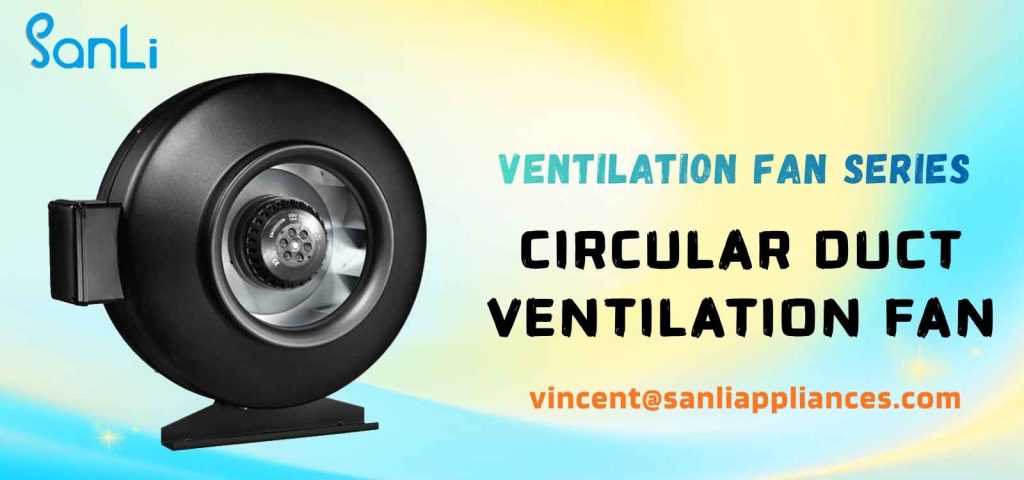
Data centers demand precise and reliable ventilation to manage intense heat loads from servers and networking equipment. At SanLi Appliances, we provide full ventilation solutions for data center cooling that combine high-performance axial and centrifugal fans with proven engineering practices. These systems maintain optimal temperatures, lower energy consumption, and support uninterrupted operations for brand owners, product managers, and facility engineers worldwide.
Modern data centers face escalating thermal challenges driven by artificial intelligence and high-density computing. Our experience as a leading ventilation system manufacturer shows that effective air movement remains essential even in hybrid cooling environments. We design solutions that deliver consistent airflow while meeting strict international standards.
Why Data Centers Require Robust Ventilation Solutions Today
Data centers require robust ventilation solutions to dissipate heat from high-density racks and maintain operational uptime. Without adequate airflow, server temperatures rise rapidly, leading to reduced performance, hardware failures, and costly downtime. Our team has observed that cooling accounts for 30 to 40 percent of total facility energy use, making ventilation a critical factor in controlling operational expenses.
Rising rack densities, often exceeding 20 kW per rack and climbing toward 100 kW in AI applications, intensify the need for precise air delivery. Traditional cooling methods struggle under these conditions, increasing the demand for industrial-grade fans that provide high static pressure and large volume flow rates.
We understand the pressure facility managers face when balancing scalability with sustainability goals. Proper ventilation prevents hot spots, supports hot-aisle and cold-aisle configurations, and integrates seamlessly with existing infrastructure.
Major Cooling Challenges in Contemporary Data Centers
High power densities and energy costs represent the primary cooling challenges in contemporary data centers. Servers generate substantial heat that must be removed continuously to prevent thermal throttling and equipment damage. According to the Uptime Institute Global Data Center Survey 2025, the weighted average Power Usage Effectiveness (PUE) stands at 1.54, indicating that infrastructure still consumes significant power beyond IT loads.
Additional concerns include regulatory pressure for lower greenhouse gas emissions, water scarcity in liquid-cooling applications, and the need for rapid scalability. Supply chain disruptions can delay component availability, while inconsistent fan performance leads to vibration, noise, and premature wear.
Our factory audit processes reveal that many facilities experience uneven airflow distribution, which reduces overall system efficiency. Ventilation solutions address these issues by delivering targeted air movement across server racks and CRAC units.
How Axial and Centrifugal Fans Support Data Center Airflow Requirements
Axial fans excel in high-volume, low-pressure applications while centrifugal fans deliver the high static pressure needed for dense server environments. Axial models move large volumes of air efficiently across open spaces or through raised-floor plenums. Centrifugal designs, particularly backward-curved impellers, maintain performance against system resistance in ducted or high-pressure setups.
Key performance metrics include cubic feet per minute (CFM), static pressure in inches of water gauge, and fan efficiency ratings. Electronically commutated (EC) motors in our product lines adjust speed dynamically, reducing energy draw by up to 30 percent compared with traditional AC motors. This commercial impact translates directly to lower electricity bills and improved PUE.
We integrate these fans into supply, exhaust, and recirculation systems. For example, axial fans often serve as make-up air units, while centrifugal models handle return-air paths in computer room air handlers.
Benefits of High-Efficiency Ventilation Systems for Energy Reduction
High-efficiency ventilation systems lower PUE and operational costs by optimizing airflow and minimizing fan power consumption. Our energy-saving motors and optimized air-flue designs achieve superior aerodynamic performance, allowing facilities to maintain required cooling with smaller, quieter equipment.
Facilities that upgrade to variable-speed fans report measurable reductions in annual energy use. These systems also extend equipment life by reducing thermal stress on servers.
In our work with international distributors, we have seen that high-efficiency ventilation system solution for applications deliver both immediate savings and long-term reliability. Explore our BPT series energy-efficient ceiling-mounted ventilation fan for compact installations.
Integrating Ventilation with Hybrid Cooling Architectures
Hybrid cooling architectures combine liquid cooling at the chip level with ventilation for room-level heat rejection. Ventilation solutions handle the secondary heat load that liquid systems cannot capture entirely. Our fans support direct-to-chip and rear-door heat exchangers by providing consistent ambient air movement.
This integration maintains redundancy requirements, often configured in N+1 arrangements. Precise control through building management systems allows dynamic response to varying IT loads.
Real-World Case Study: Successful Ventilation Implementation
NTT Global Data Centers achieved sustained efficiency gains by deploying EC centrifugal fans in precision air-conditioning units. In their Frankfurt facility, three RadiPac series fans per unit operated continuously for nearly ten years while handling inlet air temperatures of 36 to 39 °C and delivering cooled air at 23 to 24 °C. The installation maintained stable server environments with minimal maintenance.
Similar results appear in Asian e-commerce data centers where centrifugal fan upgrades reduced average room temperatures from 30 °C to 22 °C. These examples demonstrate the commercial value of selecting fans engineered for continuous duty cycles.
Our own quality assurance team applies identical testing protocols to every unit leaving the factory.
International Standards and Compliance for Data Center Ventilation
Compliance with ASHRAE Standard 90.4-2025 and TC 9.9 thermal guidelines ensures ventilation systems meet current efficiency and safety requirements. These standards address energy performance, allowable temperature ranges, and humidity control for information technology equipment.
Our products carry ISO 9001, ISO 14001, CE, RoHS, UL, and additional certifications required for global markets. This alignment gives purchasers confidence when specifying equipment for new builds or retrofits.
When evaluating building codes and performance criteria, many professionals reference essential of bathroom ventilation fans in building standard approaches that translate well to data center applications. Additional insights on product selection appear in the ceiling exhaust fan buying guide for improved air quality resources.
Factory Floor Insights from a Veteran Audit Director
As Factory Audit Director with over two decades of hands-on experience, I emphasize the importance of dynamic balancing and bearing selection during manufacturing. Poorly balanced impellers create vibration that shortens motor life and transmits noise into the data hall. Our QA team performs 100 percent vibration testing at operating speeds.
Insider tip: Always verify the motor’s insulation class and thermal protection rating. Class F or H insulation combined with embedded sensors prevents unexpected failures during peak summer loads.
Another practical observation concerns impeller material choices. Powder-coated steel or reinforced composites resist corrosion in humid environments while maintaining structural integrity at high RPM.
Common Risks and Trade-Offs with Low-Cost Ventilation Suppliers
Low-cost suppliers often compromise on motor quality and impeller precision, leading to higher failure rates and increased maintenance costs. Trade-offs include reduced efficiency, louder operation, and shorter service intervals. Facilities may save on initial purchase price but incur higher lifetime ownership expenses.
Risks include inconsistent static pressure performance that creates airflow short-circuiting and potential compliance violations. In extreme cases, premature bearing failure has caused unplanned outages during critical business periods.
We openly discuss these limitations so customers can make informed decisions. Our transparent audit reports and sample testing programs help mitigate supply risks.
SanLi Appliances Full Ventilation Solutions Portfolio
SanLi Appliances offers complete ventilation solutions tailored for data center cooling through our full line of axial and centrifugal fans. These products serve indoor and outdoor installations with capacities suited to small edge facilities or large hyperscale operations.
If you want to start the wholesale business in the fastest way possible, browse our extensive product catalog, review the ventilation fan manufacturer collection, examine axial fan manufacturer lineup, or explore centrifugal fan manufacturer options.
Strong reasons to cooperate with a specialized ventilation fan manufacturer become evident in reduced lead times and consistent product quality. Learn more here: why need to cooperative with ventilation fan manufacturer.
Expert choosing the right advice for ventilation fan solutions ensures long-term performance and cost control. Detailed recommendations are available at choosing the right advices for ventilation fan solutions.
Recent bathroom exhaust fan innovations that make operation easier also inform our data center designs by emphasizing quiet, efficient performance. Explore related advancements at bathroom exhaust fan innovations that make your life easier.
Technical Specifications Comparison
| Feature | Axial Fans (SanLi SFG Series) | Centrifugal Fans (SanLi CF Series) | Commercial Impact |
|---|---|---|---|
| Airflow (CFM) | High (up to 50,000+) | Medium to High (up to 30,000+) | Supports large room volumes |
| Static Pressure (in. wg) | Low to Medium (up to 2) | High (up to 8+) | Overcomes duct and filter resistance |
| Efficiency (EC Motor) | 85–92% | 88–94% | Reduces annual energy costs |
| Noise Level | Lower at high volume | Controlled with silencers | Meets data hall acoustic limits |
| Redundancy Options | N+1 configurations | Parallel array setups | Maintains uptime during maintenance |
| Typical Applications | Make-up air, general exhaust | CRAC return air, high-pressure ducts | Flexible system integration |
This table illustrates how each fan type contributes to overall system performance.
Frequently Asked Questions
What airflow volume is typically required for a standard data center rack? A single 10 kW rack generally requires 800 to 1,200 CFM depending on inlet temperature and server configuration. Our engineering team calculates exact requirements based on heat load and room layout.
How do EC motors improve ventilation solutions for data center cooling? EC motors provide variable speed control and higher part-load efficiency, reducing energy consumption by 20 to 40 percent versus fixed-speed alternatives while maintaining precise temperature control.
Can existing air-cooled data centers transition to hybrid systems without major infrastructure changes? Yes. Strategic placement of high-static-pressure centrifugal fans and supplemental axial units allows incremental upgrades while preserving current CRAC layouts.
What certifications should purchasers verify for international B2B shipments? Look for ISO 9001 quality management, CE marking for Europe, UL listing for North America, and RoHS compliance for environmental standards. SanLi Appliances holds all relevant certifications.
How quickly can SanLi Appliances fulfill large-volume wholesale orders? Our production capacity and inventory programs support lead times as short as four to six weeks for standard models, with expedited options for urgent projects.
Do ventilation fans require specialized maintenance in data center environments? Routine filter changes and annual bearing inspections suffice. Our designs minimize dust accumulation and include easy-access service points.
SanLi Appliances stands ready to support your data center ventilation requirements with proven, certified solutions. Our focus on quality, efficiency, and customer partnership ensures that every project receives tailored attention.
For additional guidance, visit our company blog or resources section to find more helpful information.
To request a quick quote or discuss specific project requirements, please send an email to inquiry@sanliappliances.com. We look forward to partnering with you on reliable ventilation solutions for data center cooling.
